 Listicle
Do Bulk Commercial Door Orders Qualify for Discounts?
Quick Summary
Bulk commercial door discounts are usually tiered by order thresholds, not a single published percentage, and thresholds vary by supplier and product line. Ask for the tier schedule in writing, including whether the discount applies to the whole order or only units above each threshold.
- Ask for the discount tier schedule in writing before comparing quotes.
- Confirm whether the discount applies to the entire order or only units above each threshold.
- Check whether mixed sizes and configurations count toward the same volume tier.
- Compare the per-unit price at your quantity against the next tier down.
- Compare quotes on total landed cost, including freight, taxes, hardware, and installation.
Table of Contents
- How Bulk Commercial Door Discounts Work
- What Affects the Price of a Multi-Door Order
- Preparing a Bulk Commercial Door Quote Request
- Commercial Roll-Up Door Specifications to Confirm
- Commercial Roll-Up Door Lead Times for Multi-Door Projects
- Commercial Door Delivery for Large Orders
- Requesting Your Bulk Quote from Roll Up Doors Direct
- Frequently Asked Questions
How Bulk Commercial Door Discounts Work
Bulk discounts on commercial doors are rarely a single published percentage. Instead, they are typically structured around order thresholds, product uniformity, and project commitment. Understanding these mechanics helps you ask the right questions and compare quotes accurately.
Discount tiers and thresholds. Most suppliers set volume pricing in tiers based on the number of doors or the total order value. These thresholds are not universal, they vary by supplier and product line. Always ask for the specific tier schedule in writing, including whether the discount applies to the entire order or only to units above each threshold.
Eligibility and minimum quantities. Discounts may apply per door, per pallet, per project, or per annual spend. Clarify whether mixed-product orders qualify or if the discount requires identical models. Some suppliers require a minimum order quantity to unlock wholesale pricing, while others evaluate volume on a case-by-case basis. If your project involves multiple sizes or configurations, ask whether the total unit count across all line items counts toward the tier.
How to calculate your effective discount. Do not rely on the headline percentage alone. Compare the per-unit price at your quantity against the per-unit price at the next tier down. For example, compare the per-unit price at your quantity with the per-unit price at the next tier down, since the marginal savings on additional doors may be smaller than the headline suggests. Request a line-item breakdown that shows the unit price, the discount applied, and any fees that offset the savings.
Watch out: A verbal promise of "good pricing for volume" is hard to enforce. Ask for the discount schedule and eligibility terms in the written quote so you can hold the supplier to it later.
Ask for the discount in writing. A verbal promise of "good pricing for volume" is hard to hold a supplier to later.
Bulk discounts usually depend on order thresholds, product uniformity, and project commitment rather than a single published percentage. The table below summarises what to check when comparing quotes.
| Factor | What to check | Why it matters |
|---|---|---|
| Discount tiers | Ask for the tier schedule in writing | Thresholds vary by supplier and product line |
| Scope of discount | Whole order or only units above each threshold | Changes the effective saving |
| Mixed products | Whether mixed sizes count toward the tier | Multi-size orders may not qualify |
| Effective discount | Per-unit price at your quantity vs. next tier down | Headline percentage can overstate savings |
| Written terms | Discount and eligibility in the quote | Makes the supplier easier to hold to it |
What Affects the Price of a Multi-Door Order
Several factors move the final price more than the discount alone. Door size is the most obvious one. A larger opening requires more steel, heavier components, and sometimes a stronger drive system, so the cost per door rises with the opening.
Material and finish also matter. Galvanized steel, painted finishes, and custom colors each carry different costs. A color chosen from a standard swatch is usually simpler to produce than a special match.
Other factors include:
- Opening count and mix: Ten identical doors price differently from ten doors in five sizes.
- Hardware and accessories: Operators, locks, and weather seals are often priced separately from the door panel.
- Wind rating: Doors certified for higher wind loads cost more to build and document.
- Delivery terms: Freight charges can add a large amount to a multi-door order, especially for heavy panels shipped to remote sites.
Calculating total project cost. The door price is only one component of the landed cost. To estimate your true project cost, add the following to the quoted unit price:
- Freight and logistics: Ask whether the quote is FOB origin or delivered. If FOB origin, you pay freight separately, which can vary by distance, weight, and accessorial services like liftgate or inside delivery.
- Taxes: Sales tax may apply depending on your location and may be based on the delivered price, not just the door price.
- Hardware and finishing: Operators, locks, weather seals, and custom paint are often quoted separately. Confirm what is included.
- Installation: If you are not self-installing, labor costs can rival the door cost. Get installation quotes early.
- Customization: Special sizes, colors, or wind ratings may carry engineering or documentation fees.
A simple formula: Landed cost = (unit price × quantity) + freight + taxes + hardware + finishing + installation + customization fees. Compare quotes on this total, not on the headline door price.
When you compare quotes, make sure each one covers the same sizes, finishes, and accessories. A low headline price can look better only because it leaves out parts you will need.
Preparing a Bulk Commercial Door Quote Request
A complete request gets a faster and more accurate bulk commercial door quote. Before you submit anything, measure every opening and record the finished width and height. Measuring the finished frame rather than the rough opening avoids the most common sizing errors. Roll Up Doors Direct publishes a how to measure your finished frame guide that walks through the steps.
Prepare a simple schedule that lists each opening with its size, the quantity, the finish, and the intended use. A quote built from a clear schedule is far less likely to need revisions.
Then send the request through the free quote request form. Include the full schedule, the delivery address, and the date you need the doors. Pricing depends on quantity, timing, and delivery, so the more detail you include up front, the more useful the quote will be.
Commercial Roll-Up Door Specifications to Confirm
Before you order, confirm the specifications that affect fit, safety, and performance. Start with the exact opening dimensions and whether each door is installed inside or outside the frame. Then confirm the operating method, whether manual or motorized, and the track type.
Wind rating is worth checking early, especially in regions with severe weather. Ask the supplier which wind load rating each door carries and whether that rating is documented for the model you are buying.
Finish and color also belong on the checklist. A color swatch chart helps you choose finishes before you request a quote, which avoids changes after the order is placed.
For a door model with a defined configuration, review the 10 x 10 roll up door Model 1000 configuration to see how options are laid out and ordered.
Commercial Roll-Up Door Lead Times for Multi-Door Projects
Lead time for a multi-door order depends on the quantity, the configurations, and the supplier's production schedule. Larger orders with custom sizes or special finishes generally take longer than standard configurations. Ask for a lead time in writing with the quote, and confirm whether it starts when the order is placed or when the design is approved.
A common approach is to schedule deliveries in phases. Splitting a large project into two or three shipments can help keep installation moving while the rest of the order is produced.
Plan for buffer time. If a delay affects the installation crew or a construction deadline, ask the supplier what happens if production runs late.
Commercial Door Delivery for Large Orders
Delivery is often where a bulk order gets more expensive than expected. Commercial roll-up door panels are heavy and bulky, and a multi-door order may need a freight truck with a liftgate or a crew equipped to unload at a dock. Confirm whether the quoted price includes freight, the delivery destination, and any liftgate or inside-delivery fees.
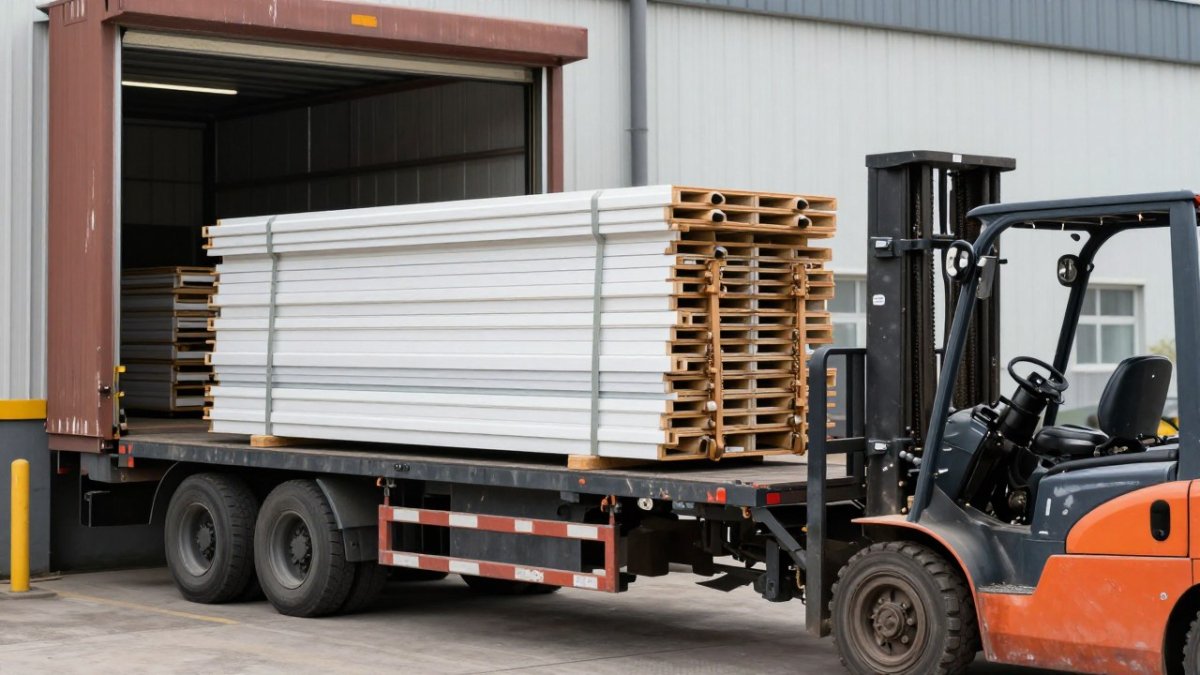
Check site access before the truck arrives. Narrow roads, low clearances, and limited unloading space can all add cost or delay the shipment. If your site has a loading dock, say so in the request so the carrier plans the right equipment.
Ask how the order will be packed and labeled. Clearly marked crates for each opening make installation faster and reduce the chance of mixing up sizes on site.
Requesting Your Bulk Quote from Roll Up Doors Direct
When you are ready to request pricing, prepare the opening schedule, the specification list, and your delivery details. A complete package helps get a more accurate answer for your multi-door request.
Submit the free quote request form with your full schedule. The more complete your information, the fewer follow-up questions you will likely need to answer. Ask about volume pricing, lead time, freight, and the terms of the low price guarantee so you know exactly what is included in the total.
Before you accept any quote, confirm that the discount, lead time, and delivery terms appear in writing. Read the low price guarantee terms to understand how the guarantee applies to your order.
Frequently Asked Questions
Do commercial door suppliers offer discounts for bulk orders?
Many suppliers price multi-door orders differently from single units, but the discount depends on quantity, door size, specifications, and delivery terms. Published pricing is often a starting point, so the final figure usually comes from a project quote. Request quotes for the exact quantity and configuration you need, then compare the total landed cost, including freight and any order-change terms, rather than comparing unit prices alone.
How can I request a quote for multiple commercial roll-up doors?
Prepare the opening width and height for each door, the quantity, whether each opening needs a specific mounting style, and your delivery location and required date. Include whether doors are for new construction or replacement. Send these details to Roll Up Doors Direct through its website so the team can prepare a quote for the full project. Keep the same specifications across all requests so the quotes are easy to compare.
What should I confirm about lead times for a multi-door order?
Ask for the lead time from order confirmation to shipment, not only to delivery. Confirm whether the quoted lead time applies to the full order or to partial shipments, and whether custom sizes change the schedule. Also ask how changes to quantity or specifications after ordering affect the timeline. Written confirmation of these terms helps your installation crew and general contractor plan the project.