 blog
Affordable Commercial Roll Up Doors: 2026 Buyer's Guide
Table of Contents
- What Affordable Commercial Roll Up Doors Actually Cost
- Matching Roll-Up Door Sizes to Your Opening
- Heavy-Duty Roll-Up Doors vs. Light-Duty Models
- Commercial Rolling Service Doors for High-Traffic Openings
- Insulated vs. Non-Insulated: Which One Fits Your Building
- How to Compare Affordable Commercial Roll Up Doors Before You Buy
- Installation, Maintenance, and Total Cost of Ownership
- Frequently Asked Questions
Last Updated: October 14, 2026
What Affordable Commercial Roll Up Doors Actually Cost
Affordable commercial roll up doors typically land in the lower half of the broader commercial garage door market, where most doors run between $1,500 and $7,000 installed, according to Apple Door's 2026 commercial garage door pricing guide.
The market itself keeps expanding. The commercial overhead doors market was valued at $3.6 billion in 2026 and is projected to reach $4.9 billion by 2030, an 8% compound annual growth rate, per Research and Markets' Commercial Overhead Doors Market Report 2026.
That price range is a starting point, not a quote. Most published prices you'll find online are either a manufacturer's list price for the door only or a dealer's installed estimate for one common size.
What the Total Actually Includes
A delivered-and-installed commercial roll up door is really five line items stacked together:
- Door and hardware. The curtain (slats), guides, bottom bar, brackets, drums, shaft, and springs. This is the line most quoted prices refer to.
- Operator or manual lift. Chain hoist, crank, or a motorized operator with controls. Motorized operators add a meaningful line item and often a separate electrical drop.
- Freight. Roll-up doors ship on long pallets or in crates. Freight scales with door count, distance, and whether the shipment needs a liftgate.
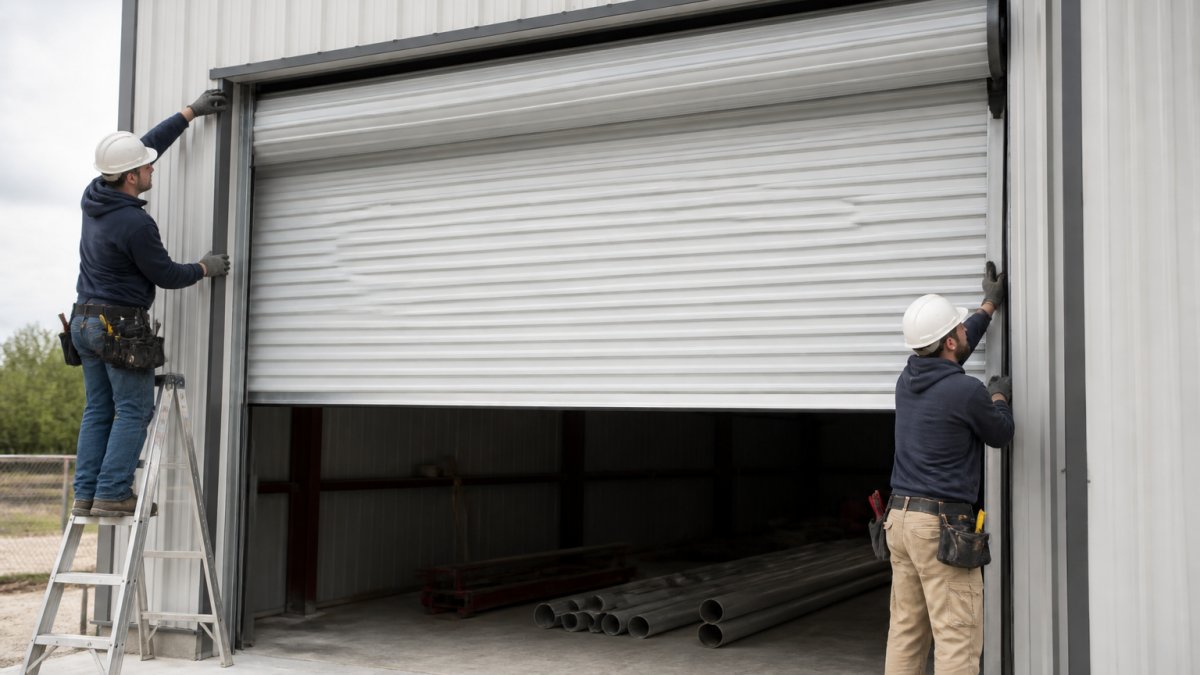
- Installation labor. The largest variable. Pre-assembled doors cut this sharply; field-assembled doors and any framing or header work push it up.
- Permits and site prep. Often overlooked. Structural header reinforcement, electrical work for an operator, and any required permit fees are real costs that don't appear on a door quote.
When other providers advertise a starting price, it's almost always the first line item only. Ask for the delivered, installed number before you compare anything.
How Each Variable Moves the Number
Four variables decide most of the bill: door size, material, insulation, and duty rating.
Size. Width and height drive material volume first.
Material. Steel slats are the budget standard. Aluminum slats cost more and resist corrosion better. Stainless steel sits at the top for washdown environments.
Insulation. Insulation adds a layer of foam or a thermal break, raising both price and energy performance.
Duty rating. Heavy-duty hardware (thicker gauge tracks, reinforced brackets, higher-cycle springs) costs more up front and lasts longer in high-traffic use.
Where the Real Savings Come From
The biggest savings rarely come from the door panel itself. They come from installation labor.
Pre-assembled designs cut on-site build time, which cuts the labor line on your invoice. Buying direct instead of through a distributor removes a markup layer. Ordering multiple doors for one project spreads freight and setup costs across more units.
A practical pattern: on a multi-door order, the per-door freight and mobilization cost drops noticeably because the crew and the truck are already on site. If you're planning a phased build-out, batching doors into one order is often cheaper than buying them one at a time, even if you install later.
Matching Roll-Up Door Sizes to Your Opening
Roll-up door sizes fall into two buckets: standard dimensions that ship quickly, and custom sizes built to your exact opening.
Standard sizes cover most storage units and service bays. Custom sizing matters when your opening falls outside the common range, which is common in renovation work where existing framing dictates the dimensions. Getting this wrong is the single most expensive mistake in the category.
Standard vs. Custom Dimensions
Standard dimensions cost less and arrive faster because they're already in production runs. Custom sizes cost more and add lead time, but they eliminate field modifications that eat labor hours.
Measure the finished opening width and height, not the rough framing. Confirm headroom above the opening for the roll and the operator. Check side room for the tracks. For wind-rated doors, the mounting surface has to handle the load the rating assumes.
| Door Type | Typical Use | Sizing Approach | Duty Rating |
|---|---|---|---|
| Standard roll-up | Storage units, service bays | Stock dimensions | Light-duty |
| Custom roll-up | Renovations, odd openings | Built to measure | Light to heavy |
| Insulated service door | Climate-controlled spaces | Stock or custom | Medium-duty |
| Heavy-duty rolling steel | Loading docks, warehouses | Built to measure | Heavy-duty |
Heavy-Duty Roll-Up Doors vs. Light-Duty Models
Duty rating is a cycle-count decision, not a marketing label. Light-duty doors handle occasional operation. Heavy-duty doors handle constant traffic without wearing out springs, bearings, and slats ahead of schedule.
For a self-storage facility, most units see light-duty cycles. For a loading dock running dozens of open-close cycles a day, heavy-duty hardware pays for itself by avoiding premature failure. Overbuying duty rating on a low-traffic opening wastes money.
Here's the trade-off most buyers miss: the door panel looks identical between duty ratings. The difference lives in the springs, drums, and track gauge. Ask what cycle life the hardware is rated for before you compare prices.
Commercial Rolling Service Doors for High-Traffic Openings
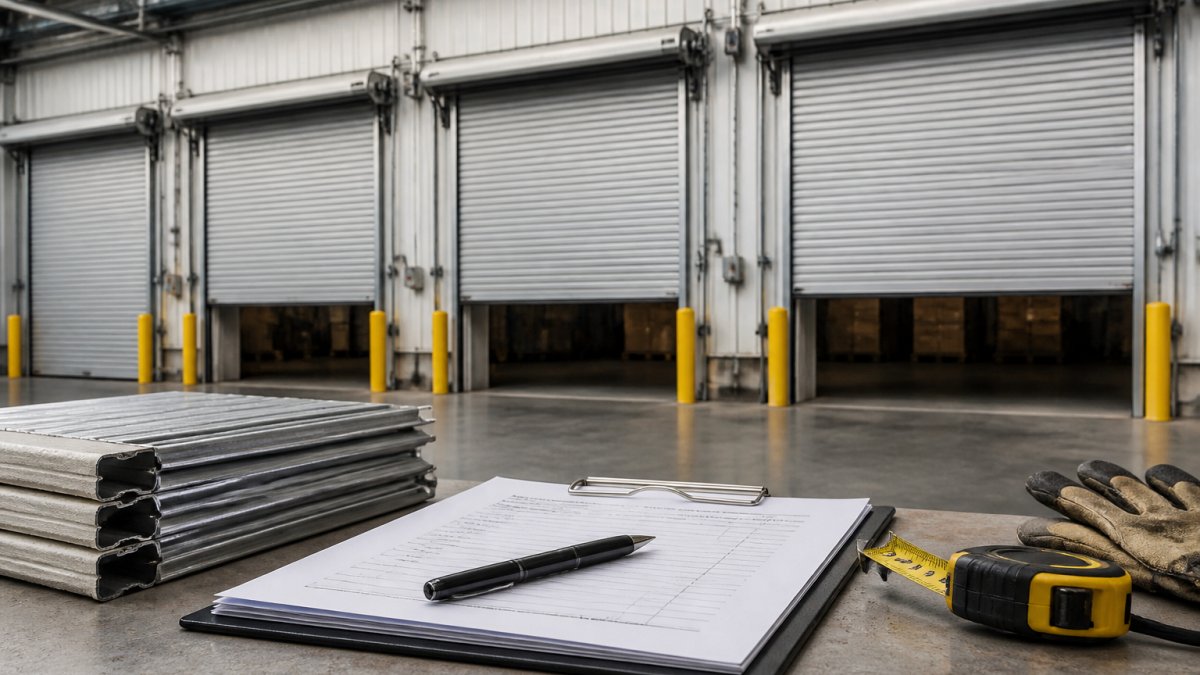
Commercial rolling service doors are the workhorse for warehouses, loading docks, distribution centers, and terminals. They coil into a compact headroll, which preserves ceiling space and clear opening height.
Overhead Door's commercial rolling door documentation notes these doors come in both insulated and non-insulated versions and in light- and heavy-weight solutions.
For high-traffic use, prioritize slat gauge, spring cycle rating, and guide alignment. Misaligned guides are the most common cause of premature wear, and they're usually an installation issue, not a product defect.
Insulated vs. Non-Insulated: Which One Fits Your Building
Insulation is a building-envelope decision, not a default upgrade. Insulated doors matter when the space behind the door is climate-controlled or when condensation is a problem.
Non-insulated doors cost less and work fine for unheated storage, open-air service bays, and sheds. Insulated doors add cost but reduce energy loss and control condensation in cold storage, food handling, and finished-goods warehouses. If your building is unconditioned, insulation buys you very little.
The practical test: if you heat or cool the space, insulate the door. If you don't, save the money.
How to Compare Affordable Commercial Roll Up Doors Before You Buy
Comparing affordable commercial roll up doors comes down to matching the door to how the opening is actually used, then confirming the quote covers everything. Price is only one input.
A Selection Framework by Business Use Case
Most buyers don't need a catalog. They need to know which door fits their building. Here's how the common use cases sort out:
| Use Case | Typical Duty | Insulation | What to Prioritize |
|---|---|---|---|
| Self-storage units | Light-duty | Non-insulated | Low cost per door, fast install, consistent sizing |
| Retail service bay | Light to medium | Usually non-insulated | Appearance, security, quiet operation |
| Workshop or service garage | Medium-duty | Insulated if heated | Headroom for the roll, operator convenience |
| Warehouse / distribution | Heavy-duty | Insulated if climate-controlled | Cycle life, slat gauge, guide alignment |
| Loading dock | Heavy-duty | Insulated or non, per building | Wind rating, impact resistance, operator speed |
| Cold storage / food handling | Heavy-duty | Insulated | Thermal break, condensation control, washdown-rated hardware |
Read the row that matches your building, then read the row above it. If your traffic is borderline, the heavier row is usually the safer buy because the cost difference is small relative to a premature failure.
Where a Cheaper Door Is the Right Call
A lower-cost door is the correct choice when the opening sees occasional use, the space behind it isn't climate-controlled, and the building isn't in a high-wind zone. Self-storage, unheated workshops, and low-traffic service bays fit this profile. Buying heavy-duty hardware here is overbuying.
Where Paying More Pays Back
Spend up when any of these are true:
- The opening cycles dozens of times a day. Spring and bearing life is the limiting factor, and heavy-duty hardware is the cheapest way to extend it.
- The space is heated or cooled. Insulation reduces energy loss and controls condensation, which protects both the door and the contents.
- The building is in a high-wind area. A certified wind-rated door and the mounting to match it aren't optional.
- Forklifts or trucks pass through. Impact resistance and guide alignment determine how often you repair the door.
The Five Questions That Separate Quotes
Once you've picked the right tier, use these to compare apples to apples:
- What cycle life is the hardware rated for? The panel looks identical across duty ratings. The difference lives in the springs, drums, and track gauge. Ask for the cycle rating, not the marketing label.
- Is the door pre-assembled? Pre-assembled doors cut installation labor, which is the largest variable line in most quotes.
- What's the wind load rating, and does the mounting support it? A rating means nothing if the wall behind it can't take the load.
- What does delivered freight cost on a multi-door order? Freight can erase a low sticker price, especially on small orders.
- What does the warranty cover, specifically the hardware? Curtain warranties and hardware warranties are often different lengths.
At Roll Up Doors Direct, we built our catalog around those questions. Our doors ship pre-assembled for quick installation, we offer certified wind load rated models, and we publish a low price guarantee. For contractors ordering custom dimensions, we build to your measurements rather than forcing a stock size.
Installation, Maintenance, and Total Cost of Ownership
Total cost of ownership is where cheap doors lose. Purchase price is roughly half the story; maintenance and replacement cycles make up the rest.
A properly installed roll-up door needs periodic lubrication of springs and bearings, inspection of cables and rollers, and occasional track alignment. Light-duty doors in heavy-traffic spots fail early and often. That's the hidden cost of buying on price alone.
Pre-assembled designs reduce installation time and cost, which lowers the first-year outlay. Durable construction and easy maintenance lower the years after that. When you compare quotes, compare the five-year picture, not the invoice.
Frequently Asked Questions
How much does a commercial roll-up door cost?
The final commercial roll-up door cost depends on door dimensions, material (steel slats, aluminum slats, or stainless steel), insulation, wind rating, and whether you need custom sizes. Request a quote from Roll Up Doors Direct for current pricing on your specific door configuration.
What factors affect the price of a commercial roll-up door?
The biggest cost drivers are door dimensions, material choice, and duty rating. A heavy-duty roll-up door built for high-traffic loading docks costs more than a light-duty model for a storage unit. Insulated doors cost more than non-insulated versions. Custom sizes, wind-rated construction, and motorized operation add to the price. Quantity matters too: buying 20+ doors for a self-storage project typically lowers the per-door price compared to a single-unit order.
Are commercial roll-up doors available with pre-assembled designs?
Pre-assembled roll-up doors ship with the curtain, hardware, and guides already put together, so installation takes hours instead of days. That cuts labor costs significantly on multi-door projects like self-storage builds or warehouse renovations. Roll Up Doors Direct offers pre-assembled designs specifically to reduce on-site assembly time and the labor expense that comes with it. Ask about pre-assembly when you request your quote.
How do I choose the right size commercial roll-up door?
Measure your finished opening width and height first, then decide whether a standard size fits or you need a custom build. Roll-up doors come in common dimensions for service bays and storage units, but openings that don't match standard sizes require custom fabrication. Add clearance for the door roll above the opening. If you're unsure, give your exact dimensions to the supplier and let them confirm the door configuration that fits.
The hard part of buying commercial roll up doors isn't finding a low price. It's finding a low price that survives a busy dock, a windy season, and a decade of cycles. Roll Up Doors Direct passes savings directly to customers by operating efficiently, offers a wide range of models for commercial and residential use, and ships pre-assembled designs for quick installation. Get started with Roll Up Doors Direct and spec a door that fits your opening, your traffic, and your budget.