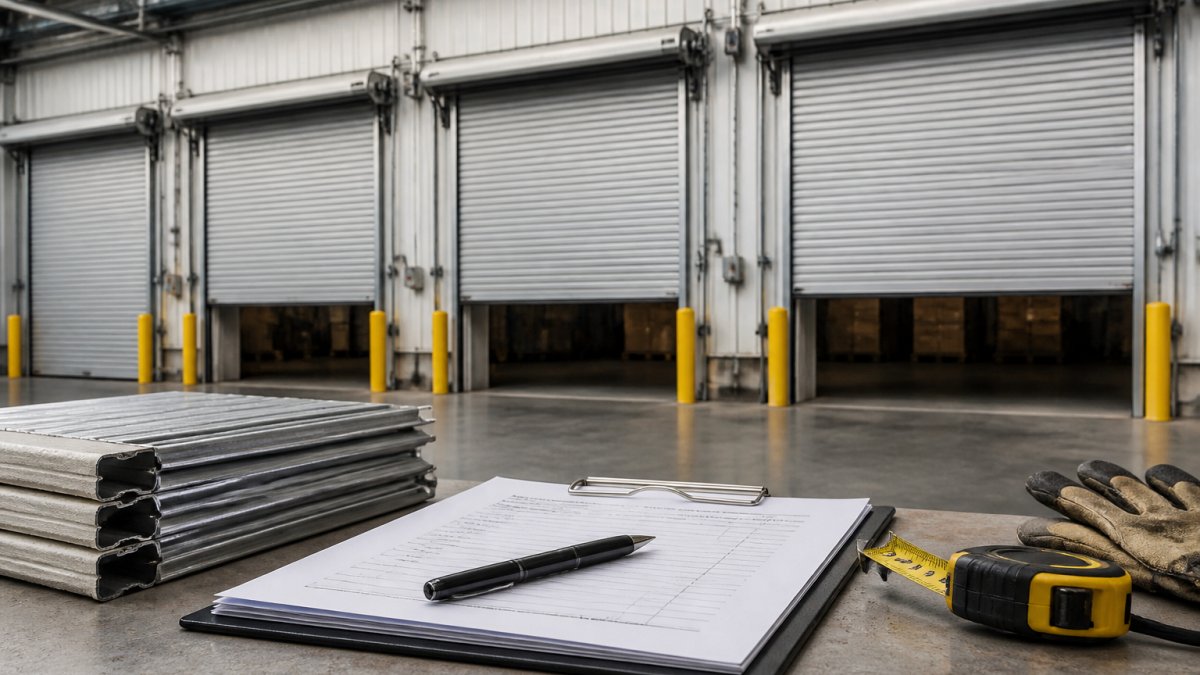
 listicle
Get a Quote for Warehouse Doors: A 2026 Guide
Last Updated: October 23, 2026
Quick Summary
A warehouse door quote provides exact specifications including door type, dimensions, cycle rating, insulation value, installation requirements, lead times, and total cost. Getting multiple quotes allows you to compare options side by side and avoid cost differences that can easily reach $20,000 or more.
- Rolling steel doors cost less but offer minimal insulation, while sectional overhead doors provide better energy efficiency for climate-controlled warehouses.
- Cycle rating, insulation level, wind-load certification, and installation complexity are major cost drivers that can create 50% price differences between quotes.
- Measure your opening in at least three places, check headroom clearance, and document your use case before requesting quotes to ensure accurate pricing.
- Standard warehouse doors ship in 2-3 weeks, but high-speed industrial doors and custom configurations can take 6-8 weeks or longer.
- Compare total value including price, lead time, warranty, and support rather than selecting the cheapest quote alone.
Table of Contents
- Why Getting Multiple Warehouse Door Quotes Matters
- Types of Warehouse Doors to Compare in Your Quote
- Understanding Warehouse Door Cost Factors
- Measuring Warehouse Door Sizes and Specifications
- How to Request a Commercial Door Quote
- Preparing for Roll-Up Door Installation and Lead Times
- Quote Comparison Checklist and Next Steps
- Frequently Asked Questions
Why Getting Multiple Warehouse Door Quotes Matters
Requesting a quote for warehouse doors is one of the most critical decisions you'll make for your facility.
The real problem isn't that quotes are hard to get, it's that most facility managers request them without understanding what they're comparing.
According to Business Research Insights' 2026 industrial door market analysis, the global industrial door market reached USD 4.7 billion in 2026 and is projected to hit USD 7.35 billion by 2035. That growth reflects real demand, warehouses, storage facilities, and commercial properties are upgrading their door infrastructure at scale. But it also means more options, more complexity, and higher stakes for getting the decision right.
At Roll Up Doors Direct, we help facility managers navigate this process. A good quote tells you exactly what you're getting: door specifications, installation requirements, lead times, and total cost.
Before requesting quotes, know that different warehouse door types serve completely different purposes.
Below, we'll walk you through what to compare, how to measure your space, and how to request quotes you can evaluate side by side.
Types of Warehouse Doors to Compare in Your Quote
When you request a quote for warehouse doors, you're choosing between fundamentally different systems, each built for different workflows and budgets. Understanding these categories is essential before you talk to suppliers. Selecting the right hardware requires careful consideration of local service standards, making the process of choosing door companies a critical step in ensuring long-term operational reliability.
Rolling Steel Doors
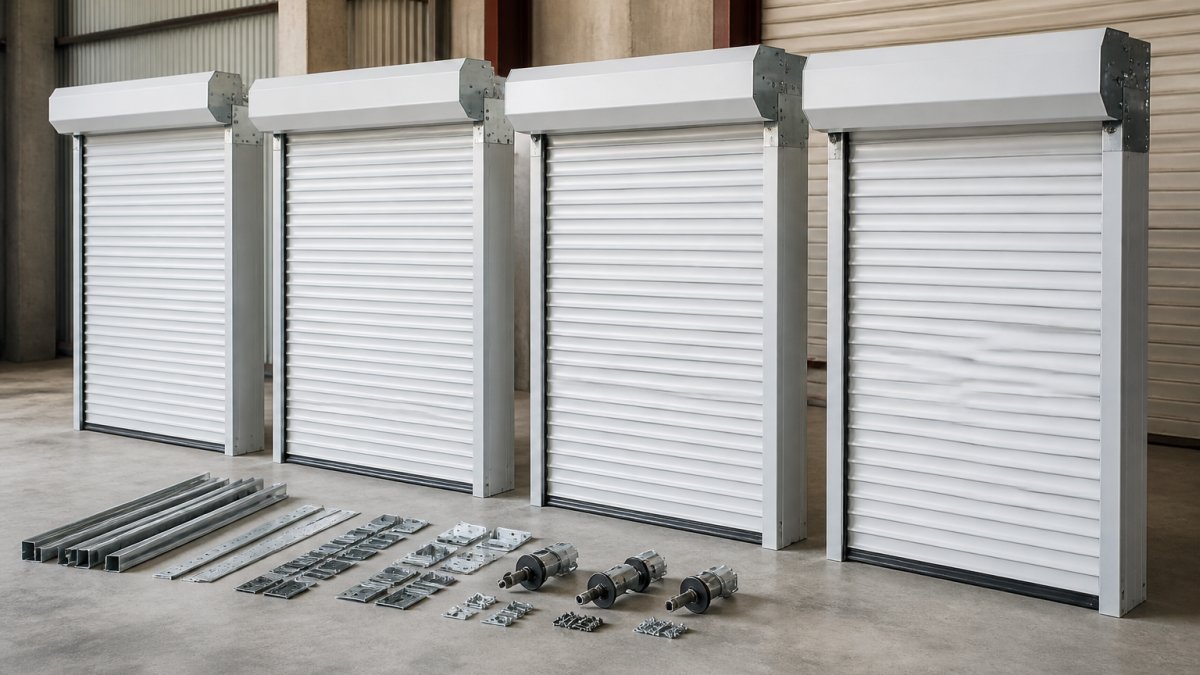
Rolling steel doors are the workhorses of warehouse operations. They roll up vertically into a compact coil above the opening, so they don't eat into headroom the way sectional doors do. If you're retrofitting a space with limited ceiling clearance, rolling steel is often your only option.
These doors are durable, relatively affordable, and require minimal maintenance, standard for self-storage facilities, loading docks, and retail service bays. The trade-off is thermal performance: basic rolling steel doors offer almost no insulation, so you'll feel that inefficiency in your utility bills if you heat or cool the space.
When you request a quote for warehouse doors in this category, you'll typically see pricing that starts lower than sectional options but varies based on gauge thickness, wind rating, and whether you add insulation. According to OC Garage Doors Guys' 2026 warehouse door cost guide, installed high-speed or specialty warehouse doors such as insulated cleanroom or dock doors can cost $20,000-$40,000, though basic rolling steel doors fall well below that range for standard applications.
Sectional Overhead Doors
Sectional overhead doors divide into horizontal panels that stack vertically and travel into the ceiling space. This design gives you better insulation options and a cleaner appearance, which matters if your door faces customers or a public street.
These doors are heavier, more complex mechanically, and require more ceiling space than rolling steel. They're ideal for climate-controlled warehouses, distribution centers, and commercial retail spaces where energy efficiency matters, and they offer advanced features like soft-close systems and integrated access controls.
When you get a quote for warehouse doors of this type, expect options for insulation levels.
High-Speed Industrial Doors
High-speed industrial doors are built for facilities where time literally costs money.
These are the premium option, engineered for extreme durability, precision operation, and often backup systems. When you request a quote for warehouse doors in this category, you're looking at a substantially different price point, an investment in operational efficiency, not just a barrier.
The trade-off is complexity. Installation requires specialized technicians, lead times are longer, and maintenance demands expertise. But for high-traffic facilities where every minute of dock time costs real money, the ROI is clear.
Fire-Rated and Hollow Metal Options
Fire-rated doors and hollow metal construction serve a specific regulatory purpose: they're required in certain building codes and facility types.
Hollow metal doors use a steel frame and hollow core, making them lightweight but rigid, and are common in commercial retail and office settings.
When you request a quote for warehouse doors with fire-rating requirements, expect higher costs because materials and construction are more specialized.
Check your local building code or consult with your architect before requesting quotes. Fire-rating requirements vary by jurisdiction, occupancy type, and proximity to other spaces. Specifying this upfront means your quotes are actually comparable.
Understanding Warehouse Door Cost Factors
The price you see in a quote reflects specific choices about materials, performance, and installation.
Size is the most obvious factor: a 12-foot-wide by 14-foot-high door costs less than a 20-foot-wide by 16-foot-high door.
Cycle rating, how many times per day the door is designed to open and close, directly affects price.
Insulation adds cost but delivers real savings if your facility is climate-controlled.
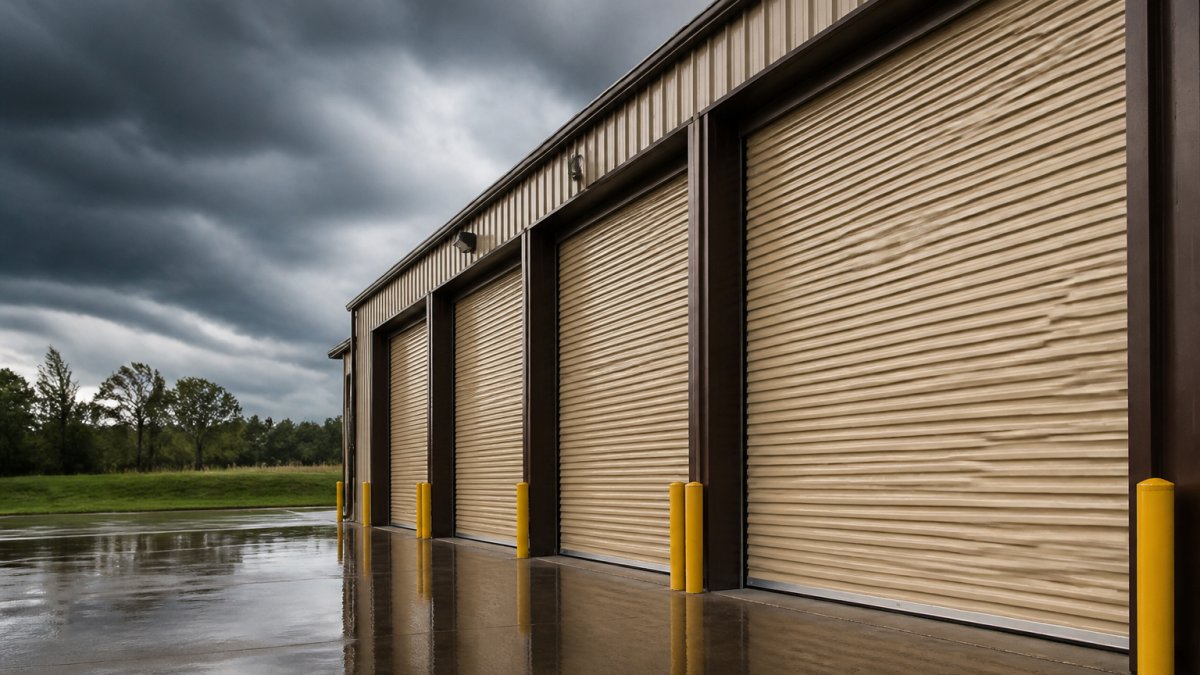
Wind load rating is critical in regions with high winds, hurricanes, or severe weather.
Installation complexity affects labor costs.
Lead time is often invisible in the quote but shows up as a cost if you're in a hurry.
Measuring Warehouse Door Sizes and Specifications
You cannot request an accurate quote without precise measurements.
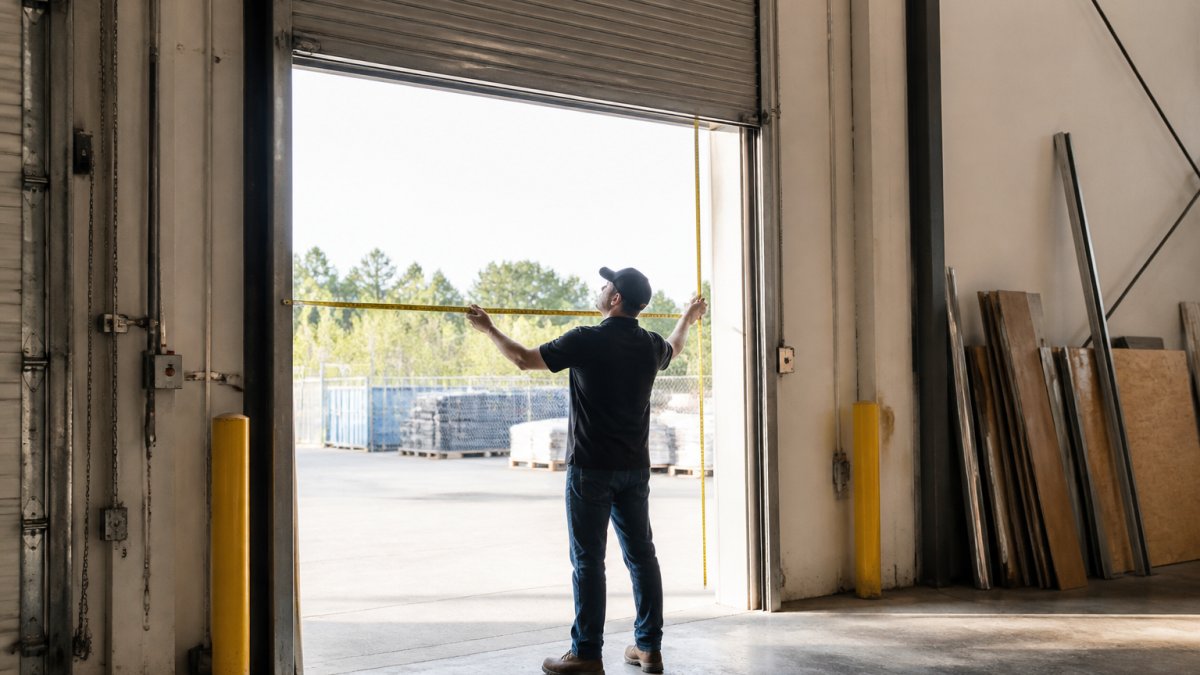
Start with the opening dimensions.
Next, measure the headroom, the distance from the top of the opening to the ceiling or any obstruction above.
Identify the door's use case. Will it open 5 times per day or 100? Will it face wind exposure or be sheltered?
Document the current door type, if any. If you're replacing an existing door, note its type, age, and condition.
Create a simple one-page specification sheet with these measurements and details. Use it for every quote request. Consistency makes comparison straightforward.
How to Request a Commercial Door Quote
Requesting a quote for warehouse doors is straightforward if you're prepared. The goal is comparable responses: same door type, same specifications, same installation scope.
Start by identifying 2-3 suppliers. Roll Up Doors Direct offers pre-assembled designs that cut installation time and cost, backed by a low price guarantee. Still, get multiple quotes to validate pricing and lead times.
Prepare your specification sheet with measurements, use case, and any special requirements (wind rating, insulation level, fire rating, etc.).
Contact each supplier with the same information. Many have online quote builders designed to capture the details suppliers need; if not, call or email with your specifications.
When quotes arrive, don't just compare price.
Ask clarifying questions if anything is unclear. Does the quote include delivery, installation, hardware, permits? A complete quote should specify all of these.
Preparing for Roll-Up Door Installation and Lead Times
Once you've selected a supplier and placed your order, installation timelines become critical. Understanding lead times and logistics helps you plan facility downtime and avoid operational disruptions.
Standard warehouse doors typically ship within 2-3 weeks of order confirmation; high-speed industrial doors and custom configurations can take 6-8 weeks or longer. Confirm lead time in writing during the quote process, and if you need the door urgently, ask about expedited options, which carry premiums.
Before installation, clear the area around the opening so installers have access.
Verify your facility meets the door's requirements.
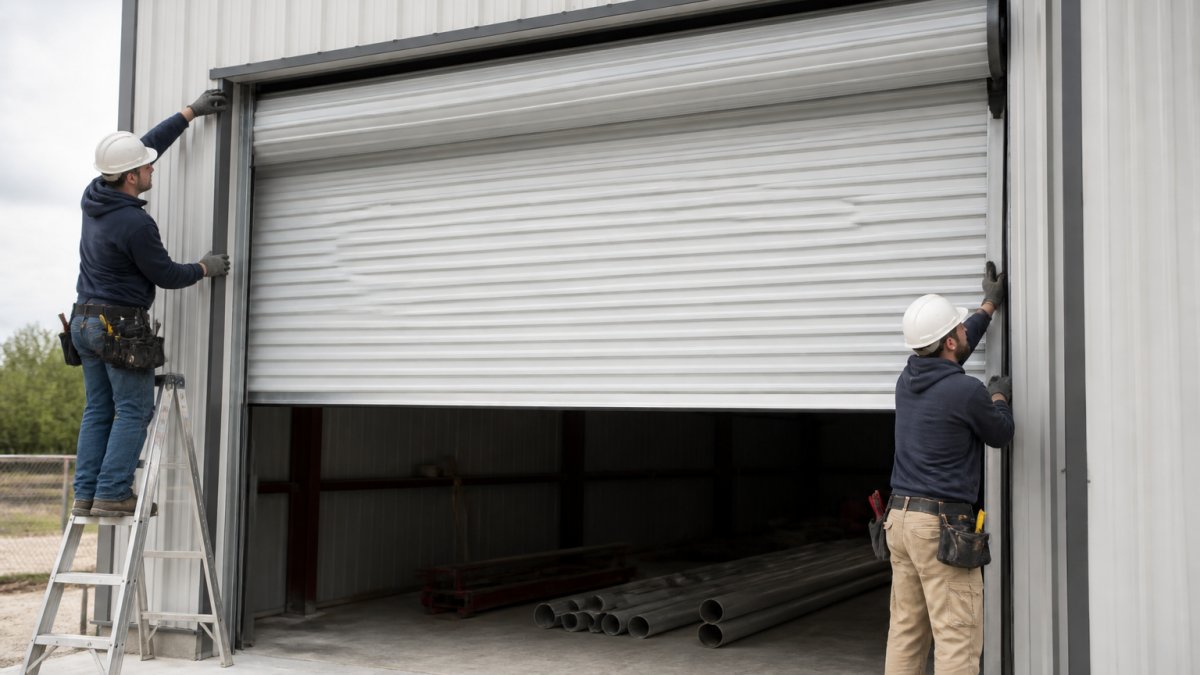
Plan for downtime. Most standard door installations take 4-8 hours, longer for complex systems. Schedule installation during a slow period if possible, or arrange temporary access if your facility can't close completely.
After installation, test the door thoroughly before resuming normal operations. Verify it opens and closes smoothly, safety features work, and automated systems function correctly. Document the installation date and warranty terms in your records.
Quote Comparison Checklist and Next Steps
Use this checklist to compare warehouse door quotes side by side:
| Specification | Quote 1 | Quote 2 | Quote 3 |
|---|---|---|---|
| Door type (rolling steel, sectional, high-speed) | |||
| Width × Height | |||
| Cycle rating (cycles per day) | |||
| Insulation level (if applicable) | |||
| Wind-load rating (if applicable) | |||
| Fire-rated or hollow metal | |||
| Lead time (weeks) | |||
| Installation included | |||
| Warranty (years) | |||
| Total cost |
Before you finalize your decision, verify these details:
- All quotes specify the same door type and dimensions
- Lead times are confirmed in writing
- Installation scope is clear (what's included, what's extra)
- Warranty terms are documented
- Payment terms and deposit requirements are specified
- Contact information for post-installation support is provided
- You've confirmed the supplier's availability for your timeline
Once you've compared quotes and selected a supplier, place your order with written confirmation covering all specifications, pricing, lead time, and warranty terms. This document protects both you and the supplier if questions arise later.
Getting a quote for warehouse doors doesn't have to be complicated, but it does require preparation. The difference between a rushed decision and a thoughtful one shows up years later in operational efficiency, energy costs, and reliability. At Roll Up Doors Direct, we make the process straightforward with pre-assembled designs that reduce installation time and a low price guarantee that ensures real value. Request a quote today and see how we can help your facility upgrade with confidence.
Frequently Asked Questions
What information do I need to get an accurate warehouse door quote?
Provide your door opening height and width in inches, the type of application (loading dock, storage unit, service bay), traffic frequency, local wind load requirements, and any special features needed like insulation or fire rating. Also specify whether you need installation or just the door unit. Having a project photo and timeline helps suppliers give accurate pricing.
How much does a warehouse door typically cost?
Warehouse door pricing varies significantly by type. Final cost depends on size, materials, features, and installation complexity. Request quotes from multiple suppliers for your specific project to compare.
What's the difference between a commercial roll-up door and a sectional overhead door?
Roll-up doors coil vertically into a compact headroom space and work well for tight installations. Sectional overhead doors use horizontal panels that slide up and back, requiring more headroom but offering better insulation options. Roll-up doors are typically faster and more affordable; sectional doors provide better energy efficiency and noise reduction. Choose based on your headroom, climate, and traffic volume.
How long does it take to receive a warehouse door quote?
Most suppliers provide estimates within 24-48 hours of receiving your specifications. Online quote builders may generate instant estimates, though detailed quotes accounting for installation and shipping typically take 2-3 business days. Provide complete measurements and project details upfront to speed up the process.
Does a warehouse door quote include installation and shipping costs?
Quote scope varies by supplier. Some provide door-only pricing, while others include installation labor and delivery. Always ask whether the quote covers site preparation, removal of old doors, installation labor, hardware, and freight. Shipping costs for multiple doors can be substantial, so request itemized breakdowns before committing. Compare total installed cost across suppliers, not just unit price.