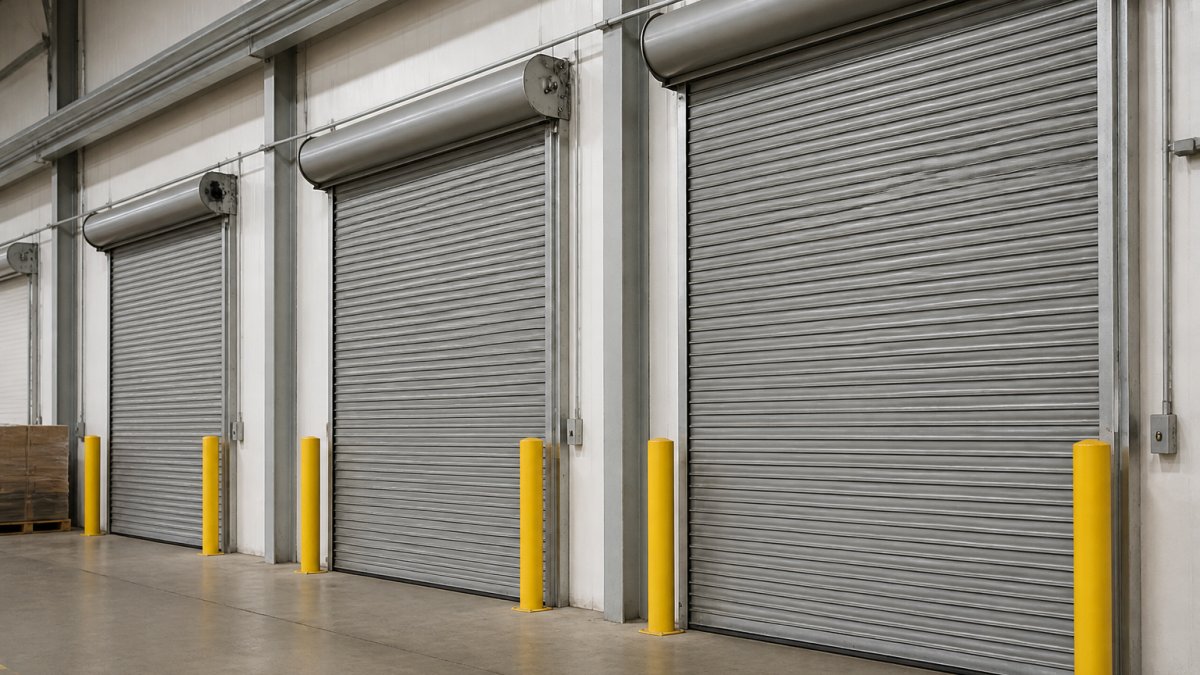
 comparison
Best Materials for High Traffic Doors: 2026 Guide
Table of Contents
- Best Materials for High Traffic Doors: An Overview
- Roll-Up Door Materials Compared: Steel, Aluminum, Fiberglass, and HDPE
- Steel vs. Aluminum Doors: Which Holds Up Better in Daily Use?
- High-Speed Fabric Doors for the Busiest Openings
- Durable Commercial Doors: Hardware, Gasketing, and Wind Ratings
- Lifecycle Cost and Acoustic Performance: What Competitors Skip
- Sustainability, LEED Credits, and Installation Complexity
- Conclusion
- Frequently Asked Questions
Last Updated: October 16, 2026
Best Materials for High Traffic Doors: An Overview
Choosing the best materials for high traffic doors comes down to matching impact resistance to your actual daily load. At Roll Up Doors Direct, we see buyers assume one material wins everywhere. It doesn't. A loading dock that takes fifty forklift passes a day has different demands than a self-storage corridor.
High traffic doors are commercial-grade openings engineered to survive repeated impact, constant cycling, and heavy wear without losing structural integrity. The material you pick decides how long that door lasts and what you spend keeping it running.
That's the tension running through this whole guide: there is no single best material for every opening. Material choice depends on performance requirements, not marketing claims. Cognitive Market Research's traffic impact door analysis notes a growing preference for lightweight, durable polyethylene and recycled polymers, but the same report gives no adoption figures, which tells you the market is still sorting this out.
Below, we compare steel, aluminum, fiberglass, and HDPE on durability, maintenance, and lifecycle cost so you can spec the right door the first time.
Roll-Up Door Materials Compared: Steel, Aluminum, Fiberglass, and HDPE
Each roll-up door material trades off differently between strength, weight, and corrosion resistance. Here is how the four main options stack up, with the specs that actually drive the decision.
Galvanized and Stainless Steel
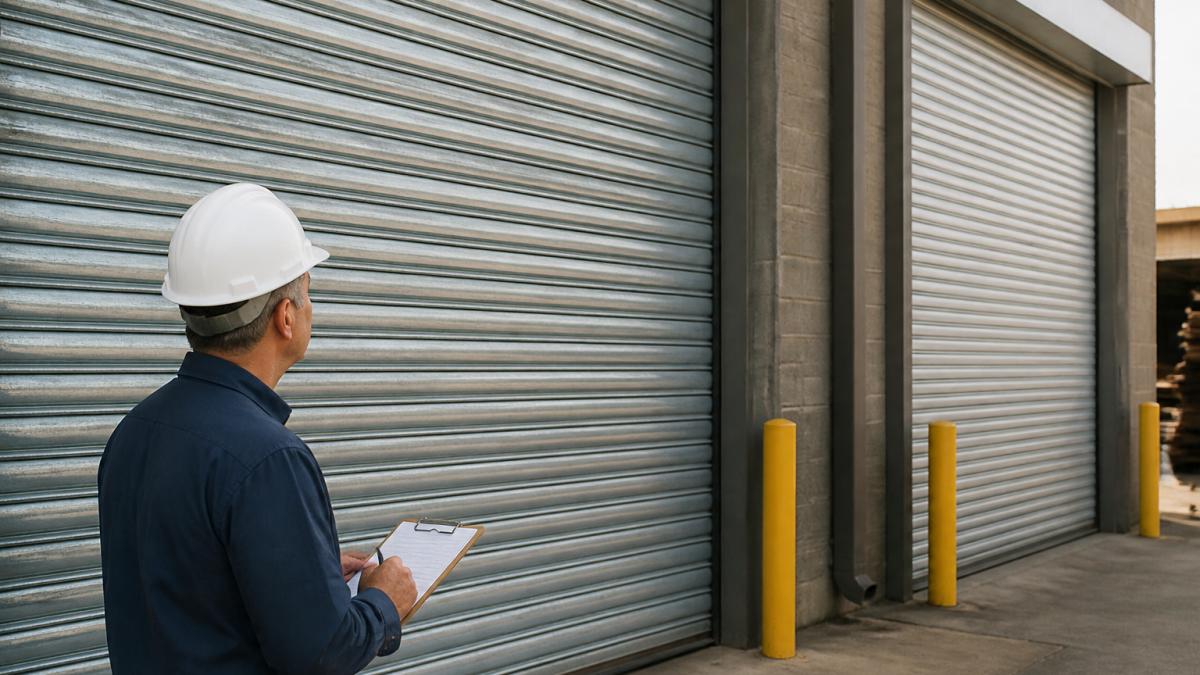
Galvanized steel is the workhorse for high-traffic commercial openings. The zinc coating is a sacrificial layer, when it is scratched, the zinc corrodes before the steel underneath does, which is why it holds up in wet or humid environments as long as the coating stays intact. Panel gauge matters: heavier gauges resist denting better but add weight, which loads the springs, tracks, and operator.
A common mistake is specing stainless everywhere "to be safe." You pay a premium for corrosion protection you may not need in a dry warehouse, and you add weight that shortens hardware life.
Aluminum
Aluminum is lightweight and resists rust through a naturally forming oxide layer, which suits openings where cycle speed and low operating load matter more than brute strength. The trade-off is stiffness: aluminum dents more easily than steel under the same impact, and thin aluminum panels can oil-can or deform over years of cycling. It is a strong choice for interior, light-contact, high-cycle openings, and a poor choice for a dock door taking forklift hits.
Fiberglass
Fiberglass resists chemicals, salts, and many corrosives that attack metal, and it will not dent the way steel or aluminum does. The failure mode is different: fiberglass cracks under sharp, concentrated impact rather than deforming, and once cracked, a panel usually needs replacement rather than repair. It fits chemical plants, coastal installations, and wash-down areas where corrosion, not impact, is the primary threat.
Polyethylene and Composite-Core Panels
Polyethylene and composite-core panels absorb impact without denting and resist moisture, which is why they show up in hygiene-sensitive facilities like food processing and cold storage. They are also lighter than steel, which reduces installation labor and operating load. The trade-off is rigidity: they flex more, so they depend on the frame and hardware to hold their shape, and they are not the right pick for openings that need a rigid, secure barrier.
| Material | Best For | Watch Out For |
|---|---|---|
| Galvanized steel | Loading docks, service bays | Rust if zinc coating is damaged |
| Stainless steel (304/316) | Wash-down, hygiene-sensitive areas | Higher cost and weight; still dents |
| Aluminum | High-cycle, light-contact openings | Dents and deforms under heavy impact |
| Fiberglass | Chemical and salt exposure | Cracks under sharp impact; hard to repair |
| Polyethylene / composite | Impact absorption, moisture resistance | Lower rigidity; relies on frame for shape |
Steel vs. Aluminum Doors: Which Holds Up Better in Daily Use?
Steel wins on raw durability; aluminum wins on weight and speed. That's the honest answer behind the steel vs. aluminum doors debate.
Steel roll-up doors resist denting and hold their shape through years of hard use, which is why they dominate loading docks and service bays. Aluminum doors cycle faster and put less stress on hardware and tracks, but they dent more easily under heavy impact. For a high-traffic opening hit by forklifts, steel is the safer bet.
The decision comes down to what actually threatens the door: impact or repetition.
High-Speed Fabric Doors for the Busiest Openings
High-speed fabric doors are the right call when traffic flow, not impact, is the bottleneck. These doors open and close far faster than rigid panels, which cuts the time an opening sits exposed.
They suit climate-controlled warehouses, food facilities, and any space where you're losing conditioned air every time a door stays open. The trade-off is impact resistance: fabric gives where steel won't, so they're best in openings with controlled traffic rather than chaotic forklift zones. Pair them with proper gasketing to seal the edges and keep thermal insulation intact.
Durable Commercial Doors: Hardware, Gasketing, and Wind Ratings
The panel gets the attention, but hardware and gasketing decide whether a durable commercial door actually lasts. Heavy-duty hardware, quality hinges on swinging doors, and correct spring tension on coiling doors prevent the sag and misalignment that kill doors early.
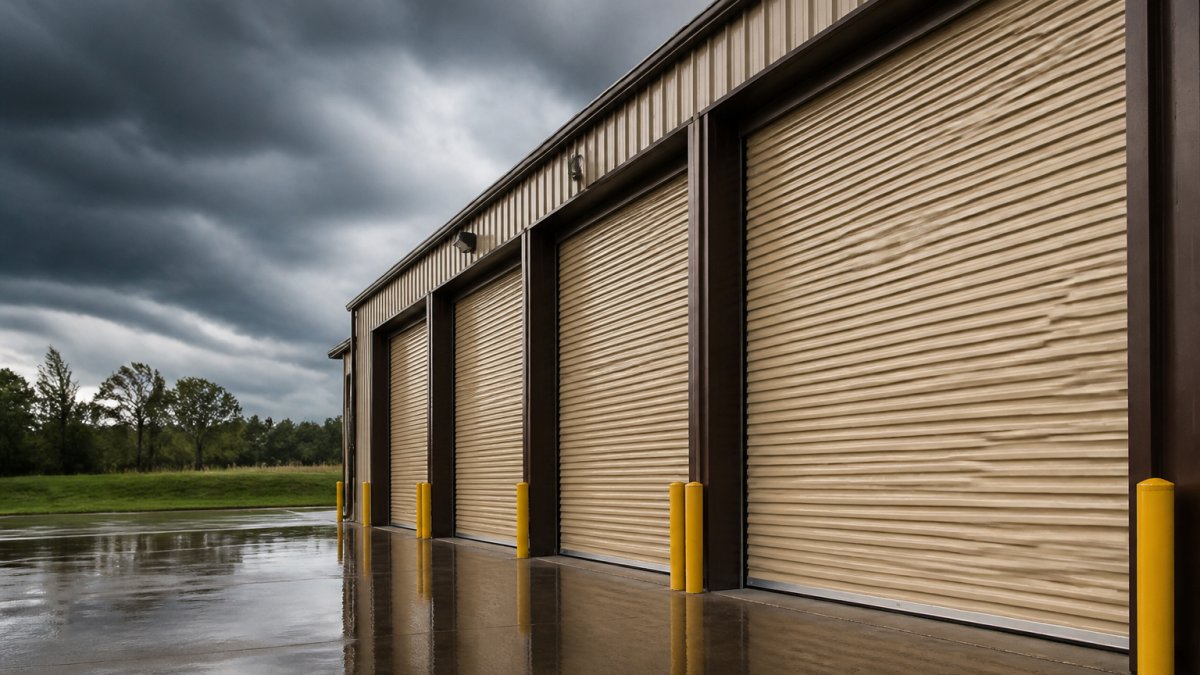
Gasketing seals the perimeter against drafts, water, and pests, and it protects thermal insulation. In exposed locations, wind ratings matter just as much. Our certified wind load rated doors are built for openings that face real weather, not just foot traffic. If you've had cheap doors fail in high winds before, the rating is the spec to check first.
| Material | Best For | Watch Out For |
|---|---|---|
| Galvanized steel | Loading docks, service bays | Rust if coating is damaged |
| Stainless steel | Wash-down, hygiene-sensitive areas | Higher cost and weight |
| Aluminum | High-cycle, light-contact openings | Dents under heavy impact |
| Fiberglass | Chemical exposure | Cracking under sharp impact |
| Polyethylene / composite | Impact absorption, moisture resistance | Lower rigidity than steel |
Lifecycle Cost and Acoustic Performance: What Competitors Skip
Most material guides stop at the purchase order. The two specs that actually decide whether a high-traffic door was a good buy, total cost of ownership and sound transmission, are the ones almost nobody covers. Here is how to evaluate both before you spec.
Lifecycle Cost Analysis: Price the Service Life, Not the Invoice
A lifecycle cost analysis (LCCA) adds up everything a door will cost from install to replacement: purchase price, installation labor, energy loss through the opening, routine maintenance, hardware replacement, panel repair, and disposal. Purchase price is usually the smallest line item over a ten-year horizon.
A common pattern in high-traffic facilities looks like this:
- Purchase and install, one-time, and the number most buyers anchor on.
- Hardware and springs, the first recurring cost. Coiling door springs, rollers, and hinges wear on a cycle count, not a calendar. A door cycling 200 times a day will eat hardware far faster than one cycling 20 times.
- Panel repair and replacement, driven by impact frequency. A dented steel panel can often be straightened or replaced section by section; a cracked fiberglass panel usually cannot.
- Energy loss, every second a door sits open, conditioned air leaves. This is where high-speed fabric doors and well-gasketed rigid doors earn back their premium.
- Downtime, the cost competitors never mention. A loading dock door that fails during a shift stops freight. That cost usually dwarfs the panel price.
When you compare steel, aluminum, fiberglass, and polyethylene, weigh them on the same service-life window. Steel typically costs more upfront and less per year in repair; lighter materials can save on installation labor and operating load but may need more frequent panel attention in impact-heavy openings. The right comparison is cost per year of service, not cost per door.
Acoustic Performance: STC Ratings by Material
Sound transmission is measured with an STC (Sound Transmission Class) rating. Higher is quieter. A single-pane hollow metal door might land in the low 30s; a solid-core or insulated composite panel can push into the 40s; a properly sealed, heavy assembly with acoustic gasketing can climb higher still.
Three variables drive real-world performance more than the panel spec sheet:
- Panel mass. Heavier panels block more sound. This is the single biggest lever, and it is why steel and solid-core composites outperform thin aluminum and fabric.
- Sealing. A perfect panel with a bad perimeter seal leaks sound at the gaps. Acoustic gasketing, drop seals, and brush seals at the track are not optional if noise matters.
- Openings and penetrations. Vision lites, pass-throughs, and unsealed hardware cutouts are acoustic weak points. Every penetration lowers the assembly's effective rating.
If the opening sits near offices, residential property, or a shared wall with a quieter operation, treat STC as a first-class spec alongside impact resistance. Ask for the assembly rating, not just the panel rating, the number that matters is the installed door, not the raw material.
Sustainability, LEED Credits, and Installation Complexity
Sustainability and installation complexity are the two factors most buyers underweight. Recycled polymers and polyethylene appeal to projects pursuing LEED certification, since material sourcing and recyclability can contribute to credit requirements. the U.S. Green Building Council's LEED rating system documents how material selection feeds into those credits.
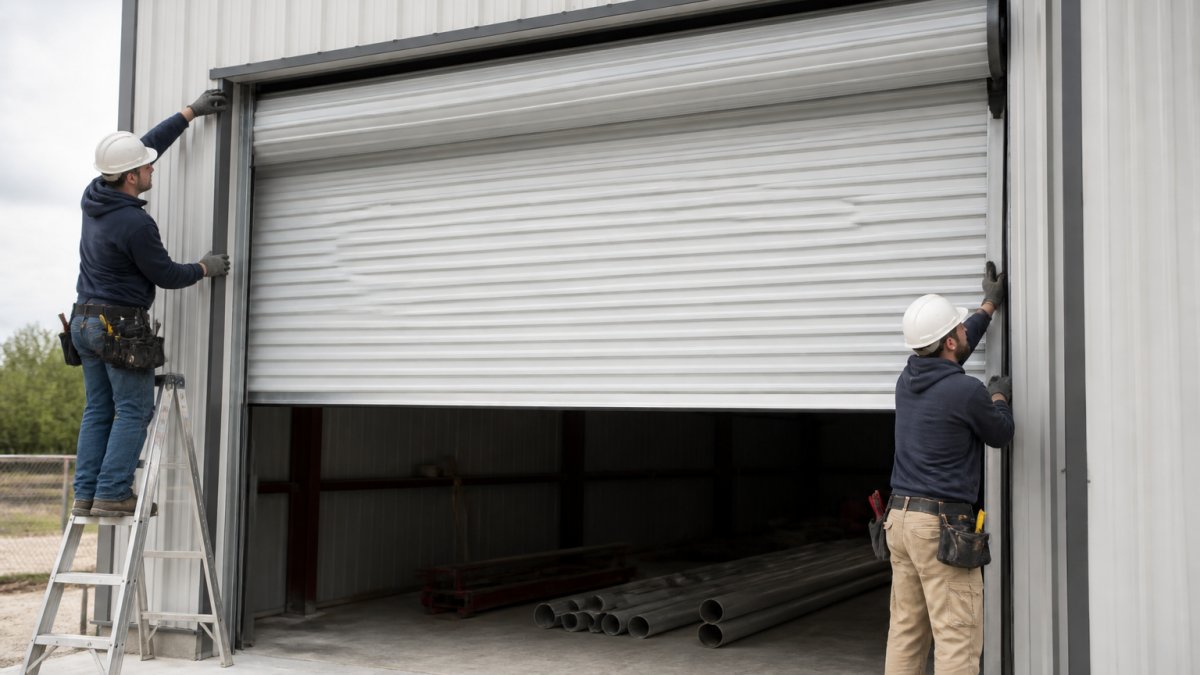
Installation complexity cuts the other way. Heavy steel panels demand more labor and equipment than lightweight aluminum or polyethylene. Pre-assembled designs reduce that burden, which matters when you're installing doors across a multi-unit project. For contractors managing tight schedules, the installation method can matter as much as the material itself.
Conclusion
Specing high traffic doors is a balancing act, and the wrong material choice shows up as repair bills and downtime. Roll Up Doors Direct builds durable roll-up doors for commercial and residential openings, with pre-assembled designs that cut installation time and cost, certified wind load rated options for exposed locations, and a low price guarantee that passes savings straight to you. Whether you need one replacement door or twenty for a new build, we have a model to fit the application. Browse our catalog and get the right door for your opening.
Frequently Asked Questions
What is the strongest material for a high traffic door?
Galvanized or stainless steel is the strongest common option for high traffic doors. Steel offers high impact resistance and structural integrity, and stainless steel adds corrosion resistance for wash-down or hygiene-sensitive areas. Aluminum is lighter and resists rust but dents more easily. For openings where weight matters, high-density polyethylene and composite cores offer a lighter alternative with good impact protection.
Are steel or aluminum doors better for frequent use?
Steel doors usually hold up better under frequent use because they resist denting and hold their shape. Aluminum doors are lighter, which reduces strain on hardware and makes them easier to operate, but they dent and scratch more easily in high-traffic openings. If your doors cycle dozens of times a day, steel with heavy-duty hardware is the more durable commercial door choice. Aluminum makes sense where weight or corrosion resistance matters more than impact strength.
What is a high-speed fabric door and when should I use one?
A high-speed fabric door uses a lightweight flexible panel that opens and closes quickly, often several feet per second, to keep traffic flowing and limit air exchange. They suit busy interior openings, cold storage, and food processing where hygiene and thermal insulation matter. Fabric doors are not built for the same impact resistance as steel, so use them where speed and separation matter more than withstanding vehicle strikes.
How do I choose between roll-up door materials for a busy commercial space?
Start with what the opening faces. Loading docks with vehicle traffic need impact-resistant steel or polyethylene. Wash-down areas need stainless steel or USDA-accepted surfaces. Interior separations with frequent foot traffic suit high-speed fabric doors. Then weigh corrosion resistance, thermal insulation, wind rating, and lifecycle cost. Roll Up Doors Direct offers certified wind load rated doors and pre-assembled designs, so check current models and pricing on their site for your specific project.