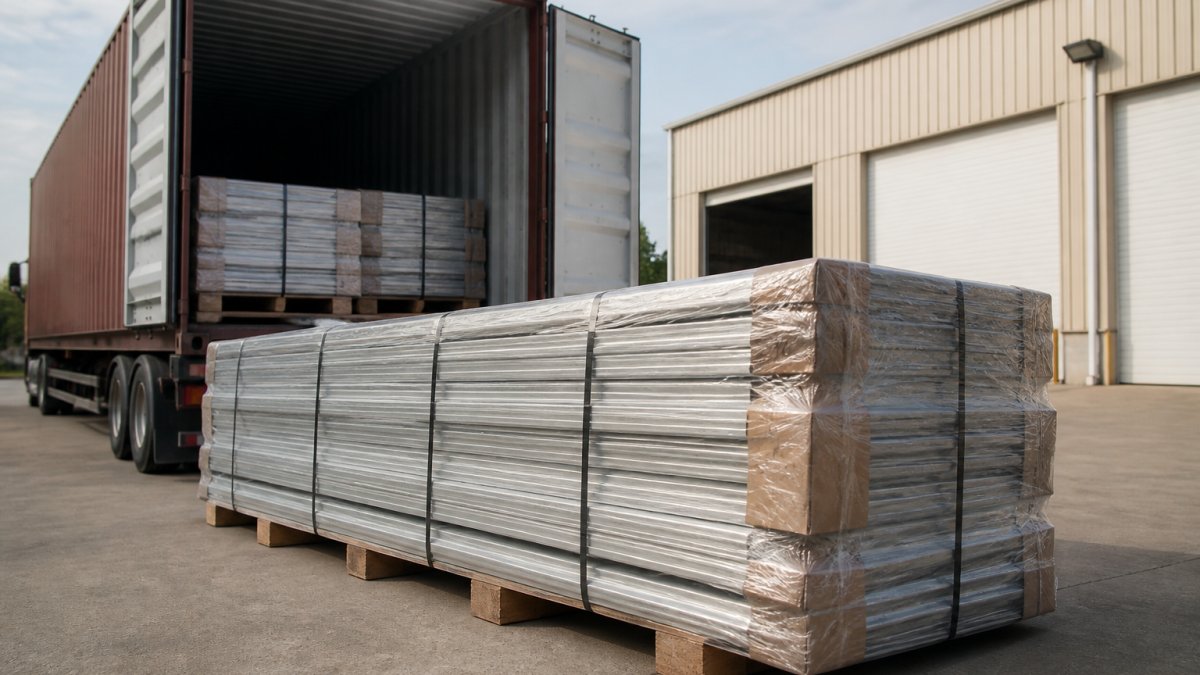
 how-to
What Drives Bulk Self Storage Door Shipping Costs
Last Updated: October 28, 2026
Quick Summary
Bulk self storage door shipping costs are driven by weight, density, freight class, distance from the shipping point, and delivery access rather than a flat per-door rate. Divide the total freight charge by your door count to get true door shipping costs, then compare carriers and order sizes. Asking for freight class and dimensional weight on every quote prevents re-rating at pickup.
- Insulated doors and heavier steel gauges push shipments into higher freight classes, raising rates per hundred pounds.
- A 2026 reseller budget guide lists $450 delivery for a 50-mile shipment and $1,800 for a 350-mile haul.
- Liftgate fees are charged per stop, not per door, when your site has no loading dock.
- Signing a clean delivery receipt before inspecting forfeits most damage claims, so note and photograph damage first.
- Give every carrier the same packet with door count, weight, skid count, and dock status to get comparable quotes.
Table of Contents
- What Actually Drives Bulk Self Storage Door Shipping Costs
- Why Per-Door Freight Math Beats Flat-Rate Guessing
- Getting Accurate Bulk Roll-Up Door Freight Quotes
- A Freight Quote Checklist for Door Orders
- How to Verify an Online Door Supplier Before You Wire a Deposit
- Roll-Up Door Freight Damage Inspection at the Curb
- Request a Freight Quote for Your Bulk Door Order
- Frequently Asked Questions
What Actually Drives Bulk Self Storage Door Shipping Costs
Bulk self storage door shipping costs rarely follow a simple per-door formula. Freight is priced on weight, cubic volume, distance from the shipping point, and how easily a truck can reach your site. A flat rate hides the variables that decide your final bill. Understanding these logistical complexities remains essential for avoiding hidden costs throughout the broader construction process.
The gap between a cheap quote and an expensive one usually comes down to density. Roll-up doors are heavy, awkward, and shipped upright. That combination drives freight class, and freight class drives price.
Below, we break down what moves the number, how to do per-door math before you order, and how to inspect a delivery so a damaged door doesn't become a second shipping cost.
Weight, Density, and Door Construction
Weight is the first lever. A wider door, a heavier gauge of steel, and added hardware all push the shipment into a higher freight class. Insulated doors weigh more than non-insulated models of the same size.
Density matters as much as raw weight. Freight carriers price on dimensional weight when a load takes up more trailer space than its pounds suggest. Doors stacked on a skid with wasted air space cost more per unit than a tightly built pallet.
Construction details that change the freight bill:
- Door width and height, since larger doors need longer skids, see Find the correct Roll Up Door Size for measuring guidance
- Steel gauge and whether the door is insulated
- Wind-rated models, which carry heavier reinforcement
- Hardware bundles: springs, brackets, chain hoists, and motors
Distance, Depot Location, and Delivery Access
Distance sets the base rate. A 2026 reseller budget guide from Lummid's shipping container cost breakdown lists $450 delivery for a 50-mile shipment and $1,800 for a 350-mile haul. Door freight isn't container freight, but the distance curve works the same way.
Access decides the rest. Carriers charge for what slows them down:
- No loading dock, requiring a liftgate
- Residential or tight commercial streets that block a 53-foot trailer
- Limited delivery windows or appointment-only sites
- Jobsites without room to turn around
Depot location matters too. Freight moves through terminal networks, and a shipment that transfers between hubs picks up handling charges. Direct or dedicated runs cost more upfront but cut handling risk on large orders.
Why Per-Door Freight Math Beats Flat-Rate Guessing
Per-door freight math turns a vague shipping quote into a number you can budget against. Divide the total freight charge by the number of doors, then compare that figure across carriers and order sizes. The reason this matters for self storage doors specifically is that freight is partly fixed: the truck, the terminal handling, and the fuel surcharge do not shrink just because you ordered fewer doors.
| Step | What to Do | Why It Matters |
|---|---|---|
| 1 | Get total freight quote | Establishes the full charge |
| 2 | Divide by door count | Gives true per-door cost |
| 3 | Add liftgate or access fees | Prevents surprise add-ons |
| 4 | Compare full vs. partial truckload | Reveals break-even point |
| 5 | Check lead time vs. site schedule | Avoids storage or delay costs |
Worked examples across order sizes
Run the same math at three order sizes to see where the curve flattens:
How freight class and dimensional weight change the math
Freight class is not a label you can ignore. Carriers price LTL shipments using the National Motor Freight Classification (NMFC), and doors built from heavy-gauge steel with dense hardware often land in a mid-to-high class. A higher class means a higher rate per hundred pounds, so two shipments of equal weight can price differently if one is classified higher.
Dimensional weight is the second lever. When a skid takes up more trailer space than its pounds suggest, the carrier prices on volume instead of scale weight. Doors stacked upright on a long skid with air gaps between them are a classic dimensional-weight problem. A tightly built pallet with doors nested and hardware boxed inside the footprint prices better per door than a loose stack.
When full truckload beats LTL
LTL makes sense when your order is small enough that sharing trailer space with other shippers is cheaper than renting the whole trailer. As door count climbs, the break-even point arrives: at some order size, a full truckload or a dedicated run costs less than LTL plus the handling that comes with terminal transfers. Buyers outfitting storage units can also explore the Rite Away Relocatable Building System that pairs with bulk door orders.
Getting Accurate Bulk Roll-Up Door Freight Quotes
Accurate bulk roll-up door freight quotes start with complete shipment details. Carriers can't price what they can't measure, and a quote built on guesses gets re-rated at pickup.
Give every carrier the same packet:
- Exact door count, model, and dimensions
- Total shipment weight and skid count
- Delivery address with dock or liftgate status
- Required delivery date and any site restrictions
- Whether the site can accept a full trailer
Vague quotes are the norm in this category. A supplier that asks for weight, dimensions, and access details before quoting is doing it right. One that fires back a number without those questions is guessing.
Our brochures and installation downloads list the specs and weights you need to build that packet.
A Freight Quote Checklist for Door Orders
Use this checklist before you accept any freight quote for a door order. Each line catches a charge that shows up later if you skip it. The goal is not just to collect line items but to make two quotes comparable, because a cheap headline rate with undisclosed accessorials is often more expensive than a higher all-in quote.
- Door count, model numbers, and dimensions confirmed in writing
- Total shipment weight and number of skids stated
- Freight class listed on the quote
- Delivery address verified as commercial or residential
- Dock availability confirmed, or liftgate fee quoted
- Appointment or inside-delivery fees disclosed
- Transit time and delivery window in writing
- Carrier name and tracking method provided
- Damage claim process and inspection window explained
- Fuel surcharge and accessorial charges itemized
What each line item actually means
A freight quote is built from a base rate plus accessorials. Understanding each one lets you tell a real quote from a placeholder.
- Base rate: the carrier's charge for moving the shipment from origin to destination, driven by weight, class, and distance.
- Fuel surcharge: a percentage applied to the base rate that moves with diesel prices. It should be itemized, not folded into a single number.
- Liftgate fee: charged when the site has no dock and the driver must lower the shipment to the ground. It is a per-stop charge, not per door.
- Residential or limited-access fee: charged when the delivery address is not a standard commercial dock.
- Appointment or inside-delivery fee: charged when the carrier must schedule a window or move freight beyond the curb.
- Detention fee: charged when the truck waits beyond the free time at pickup or delivery, usually because the site was not ready to unload.
If a quote leaves any line blank, ask. The Federal Motor Carrier Safety Administration sets the rules carriers operate under, and a legitimate carrier will document accessorial charges rather than spring them at delivery.
How to compare two quotes side by side
Put both quotes in the same format before you decide. Normalize them by per-door cost, not total, and confirm both include the same accessorials.
| Comparison point | Quote A | Quote B |
|---|---|---|
| Total freight | $1,400 | $1,250 |
| Door count | 40 | 40 |
| Per-door freight | $35 | $31.25 |
| Liftgate included | Yes | No (+$150) |
| Fuel surcharge itemized | Yes | No |
| Transit time | 5 days | 9 days |
The packet that gets comparable quotes
Give every carrier the same packet so the quotes are apples to apples:
- Origin ZIP code and destination ZIP code
- Exact door count, model, and dimensions
- Total shipment weight and skid count
- Delivery address with dock or liftgate status
- Required delivery date and any site restrictions
- Whether the site can accept a full trailer
How to Verify an Online Door Supplier Before You Wire a Deposit
Wind rating is where cheap doors fall apart. Ask for the certification, not a verbal promise. A certified wind load rated door comes with documentation, and a supplier that can't produce it is telling you something.
Roll-Up Door Freight Damage Inspection at the Curb
Inspect every door before you sign the delivery receipt. Once you sign clean, the carrier's liability largely ends and damage becomes your problem.

What to check at the curb:
- Count the doors and skids against the bill of lading
- Look for bent slats, crushed tracks, and dented end caps, Roll Up Door Media shows installation videos and photos of undamaged doors and hardware
- Check hardware boxes for missing springs, brackets, or bolts
- Photograph any damage before the driver leaves
- Note damage on the receipt and keep a copy
Watch out: signing a clean receipt before inspecting forfeits most damage claims. Note the damage on the paperwork and photograph it on the trailer.
Request a Freight Quote for Your Bulk Door Order
Our pre-assembled designs are intended to help reduce installation time and costs, and certified wind load rated models are available. Our low price guarantee applies to in-stock merchandise. Get the specs from our brochures.
Frequently Asked Questions
How are shipping costs calculated for bulk self-storage doors?
Freight carriers price a bulk door shipment on total weight and cubic dimensions, the distance from the shipping depot to your site, and whether the destination needs a liftgate, residential delivery, or inside placement. Door count matters less than the combined freight class of the pallets. Ask for the quote broken out by line item so you can see which accessorials are adding cost and which you can remove by adjusting delivery conditions.
What information do suppliers need to quote freight for multiple doors?
Give the supplier the exact door sizes and quantities, the full delivery address and site type, whether a forklift or loading dock is available, and your target delivery window. Confirm whether doors ship assembled or as separate components, since that changes pallet count and weight. A complete bulk roll-up door freight quote depends on these details, and missing any one of them usually produces a revised, higher number later.
How should I inspect self-storage doors when a freight shipment arrives?
Inspect before you sign the delivery receipt. Count the pallets and door units against the bill of lading, then walk the stack looking for crushed corners, bent tracks, torn wrapping, and shifted loads. Photograph any damage with the trailer and pallet in frame. Note exceptions on the receipt in writing, keep a copy, and report the damage to the supplier the same day so a freight claim can be filed within the carrier's window.
Can a supplier provide a freight estimate before I place an order?
Most can, and you should ask for one in writing before paying a deposit. A pre-order estimate is based on assumed weight and access, so treat it as a budget figure rather than a locked rate. Confirm what happens if the actual freight runs higher, whether the estimate includes liftgate and inside delivery, and how long the quoted rate holds. Get those answers in the quote document, not just on a call.