 comparison
Are Industrial Roll Up Doors Worth the Investment?
Last Updated: October 30, 2026
Quick Summary
Industrial roll up doors are worth the investment when your facility needs full ceiling clearance, high-cycle durability, and strong perimeter security. Coiling steel doors can last up to 30 years with proper maintenance, so the per-year cost drops well below a door you replace every eight years.
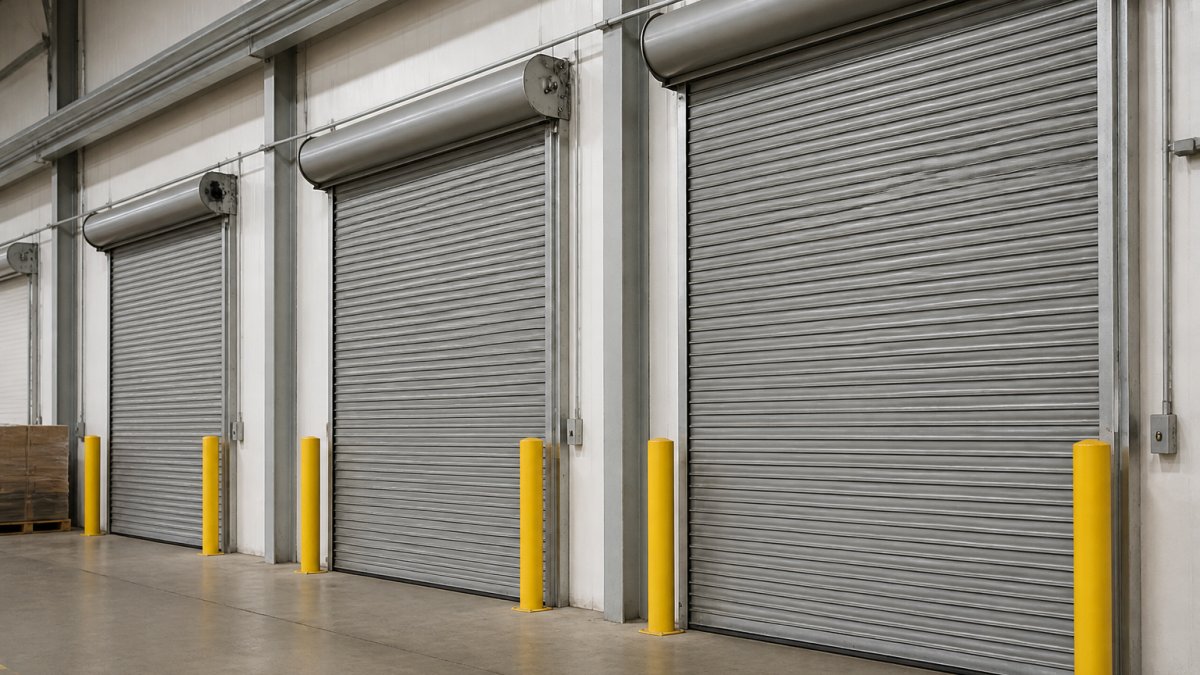
- Coiling doors coil into a drum above the opening, keeping ceiling space clear for racking, lifts, and lighting.
- High-quality rolling doors are engineered for up to 50,000 cycles, according to durability specifications.
- Ask every bidder to quote door and hardware, freight, labor, and opening prep as separate lines.
- UL labels for fire-rated rolling steel doors are available for openings up to 600 square feet.
- Maintain springs, tracks, curtain, and weather stripping every quarter, with a full service annually.
Table of Contents
- What Industrial Roll Up Doors Actually Deliver
- Coiling Steel vs. Sectional Steel: How the Alternatives Compare
- Finding Affordable Commercial Roll Up Doors Without Cutting Corners
- What Commercial Roll Up Door Installation Cost Really Includes
- Total Cost of Ownership: Where the Real Savings Hide
- Your Industrial Roll Up Door Maintenance Checklist
- Fire Ratings, Compliance, and Smart Door Integration
- Order Your Pre-Assembled Doors and Start Installing
- Frequently Asked Questions
What Industrial Roll Up Doors Actually Deliver
Industrial roll up doors are vertical-lift coiling doors built from interlocking steel slats that roll into a compact drum above the opening, and they deliver three things sectional doors struggle to match: full ceiling clearance, high-cycle durability, and strong perimeter security. The commercial overhead doors market hit USD 3.6 billion in 2026, per Research and Markets' commercial overhead doors report, and that growth is driven by facilities that need doors opening dozens of times a day.
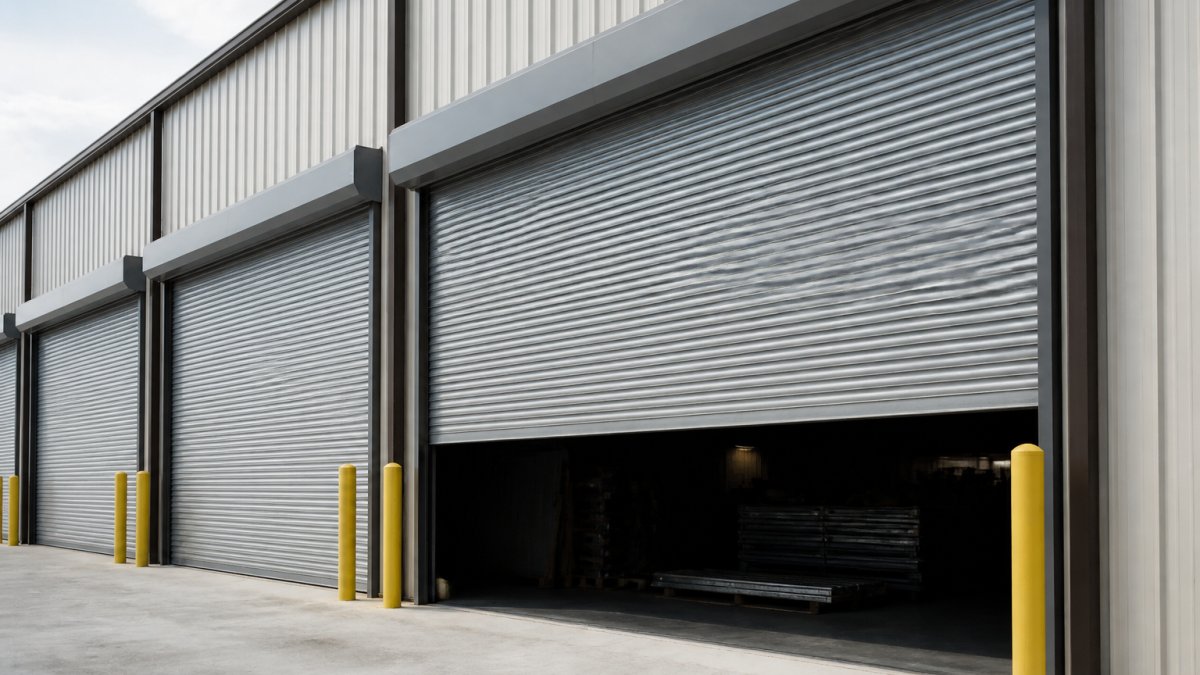
At Roll Up Doors Direct, we sell these doors because the design earns its keep. A rolling service door coils into a compact drum above the opening, which keeps the space at the ceiling clear for racking, lifts, and lighting.
Here's what most buyers miss: the door is only half the value. The other half is what it costs you over 20 years.
Coiling Steel vs. Sectional Steel: How the Alternatives Compare
Coiling steel doors and sectional steel doors solve different problems. Coiling doors win on clearance and cycle life. Sectional doors win on insulation and residential aesthetics. For a loading dock or self-storage bay, coiling is usually the smarter buy.
| Factor | Coiling Steel | Sectional Steel |
|---|---|---|
| Overhead clearance | Minimal (coils into drum) | Needs 300-450 mm of track |
| Cycle life | Up to 50,000 cycles | Lower for daily industrial use |
| Insulation | Optional insulated curtain | Standard, easier to insulate |
| Security | Strong perimeter security | Good, more panel seams |
| Best for | Warehouses, storage, service bays | Climate-controlled, residential |
Cycle Ratings, Slat Gauges, and Wind Load Ratings
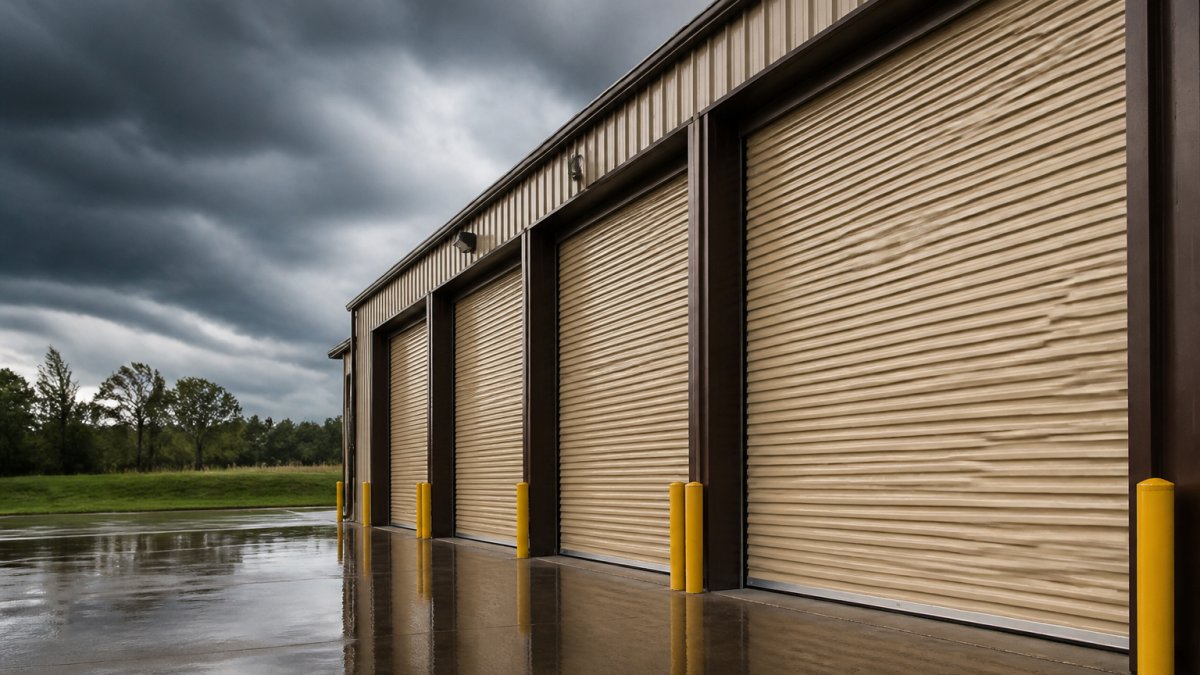
Three specs decide whether a door survives your traffic. Cycle rating is how many open and close movements the spring and hardware handle before service; high-quality rolling doors are engineered for up to 50,000 cycles, according to Commercial Roll Up Garage Doors' durability specifications. Slat gauge sets impact resistance and security, with heavier galvanized steel slats resisting denting at dock doors. Wind load resistance matters most in exposed locations, and certified wind load rated doors are available for sites where storms are a concern.
If you're unsure what rating your opening requires, our guide on what wind load rating roll-up doors need breaks down the requirements by exposure.
Finding Affordable Commercial Roll Up Doors Without Cutting Corners
Affordable commercial roll up doors come from cutting distribution waste, not materials. Long-term operational efficiency often hinges on prioritizing structural integrity over initial cost savings, a principle that remains central to evaluating whether commercial garage upgrades provide genuine value for your facility.
Check three things before you buy: slat gauge, cycle rating, and wind certification. A cheap door that fails a wind load inspection costs more than a certified one.
For a deeper breakdown of budget-friendly options, read our affordable commercial roll up doors buyer's guide.
What Commercial Roll Up Door Installation Cost Really Includes
Commercial roll up door installation cost breaks into four parts: the door and hardware, freight, labor, and any opening prep. Most quotes blur these together, which is why two bids for the "same" door can differ by thousands. Ask for each line separately and the comparison becomes honest.
The Four Cost Lines, and What Moves Each One
1. Door and hardware. This is the largest line and scales with slat gauge, cycle rating, insulation, and wind certification.
2. Freight. Quoted by weight and destination, so it scales with door size and project count.
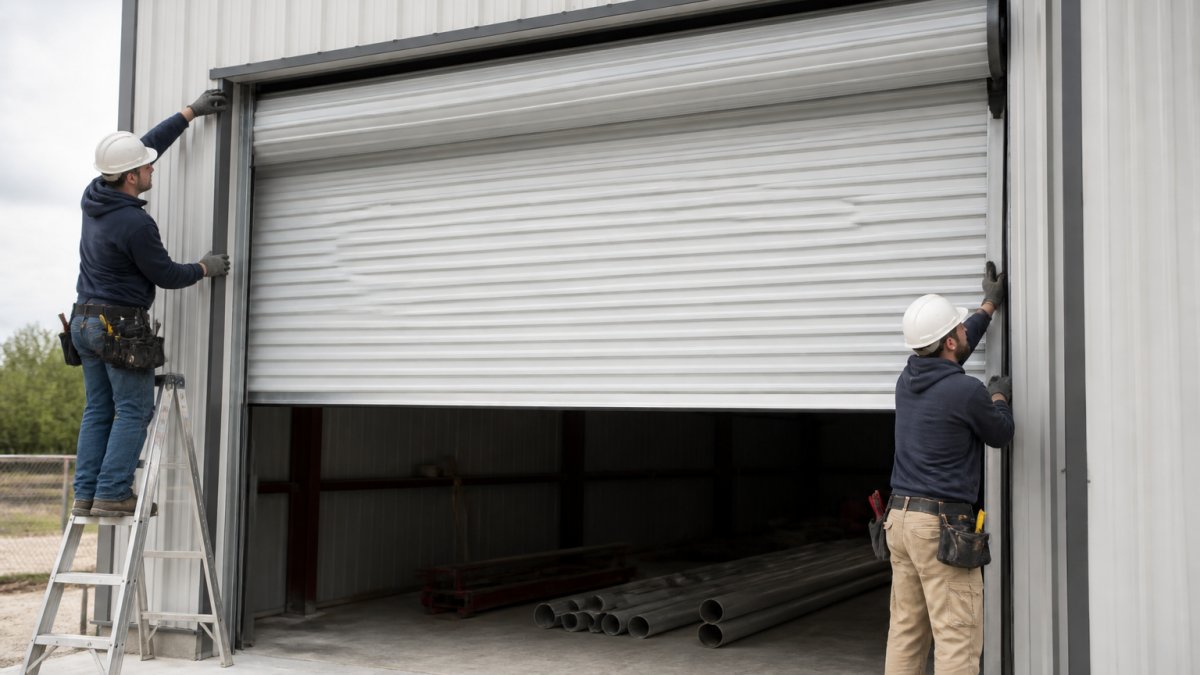
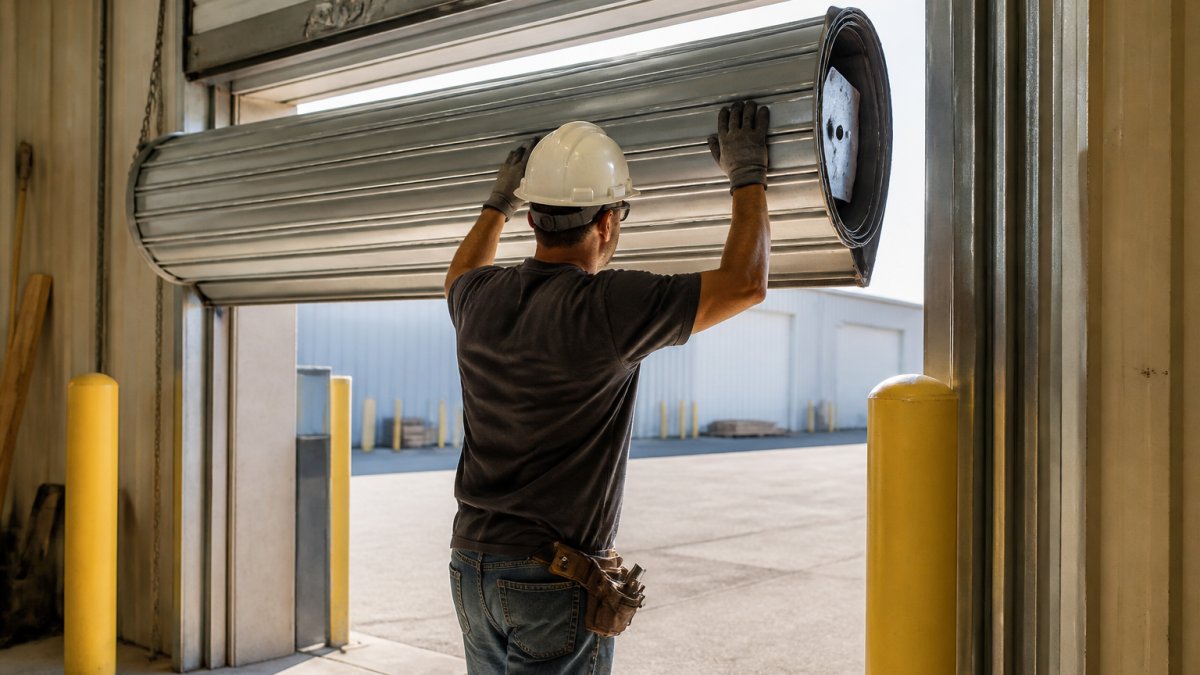
3. Labor. Driven by door type and opening condition. Pre-assembled designs are built for quicker, simpler installation, which helps reduce installation time and cost.
4. Opening prep. The wildcard.
What Drives the Quote Up or Down
- Opening size and quantity. Larger openings need heavier hardware and more freight; multi-door projects spread freight and mobilization across more units.
- Mounting condition. Face-of-wall, between-jamb, and pass-door configurations change the hardware set and install time.
- Cycle requirement. High-cycle operation calls for heavier springs and hardware, which raises the door line and lowers long-run service cost.
We don't publish a flat price because pricing depends on model, quantity, and delivery. Compare our numbers directly on the roll up door price comparison table, and read our affordable commercial roll up doors buyer's guide for how to weigh upfront price against cycle life.
Total Cost of Ownership: Where the Real Savings Hide
Total cost of ownership is where coiling doors separate from cheap alternatives. Commercial roll-up doors can last up to 30 years with proper maintenance, per Vortex Doors' lifespan analysis.
Total cost of ownership depends on installation effort, maintenance needs, and how much downtime a door causes.
A structured maintenance program changed recorded reliability and operational availability across ten industrial rolling doors in one study (RC Calero Obregón's maintenance research). The lesson: upkeep pays back in uptime, not just repairs.
Your Industrial Roll Up Door Maintenance Checklist
An industrial roll up door maintenance checklist should cover the springs, tracks, curtain, and weather stripping every quarter, with a full service annually. Skip it and the door tells you, loudly, at the worst time.
- Inspect spring assembly for wear or sagging
- Lubricate guide tracks and rollers
- Check curtain slats for dents or misalignment
Fire Ratings, Compliance, and Smart Door Integration
Fire-rated doors and smart controls are now standard expectations, not upgrades, and the compliance layer around them is where most buyers get surprised. Treat this section as a pre-purchase checklist, because a door that fails an inspection after install is the most expensive kind of door.
Fire Ratings: What the Label Actually Certifies
UL labels for fire-rated rolling steel doors are available for openings up to 600 square feet, according to Commercial Rolling Steel Doors' fire safety standards, which covers most service and dock openings. The label is opening-specific, not product-specific: the same curtain model can carry a label in one wall assembly and not another, because the rating depends on the surrounding wall, the guide assembly, and the release mechanism working together.
Three practical rules follow from that:
- Match the label to the wall, not the door catalog. A rated wall needs a rated door with a label covering that opening size and wall type. Confirm the label before you install in any rated wall.
- Automatic-closing hardware is part of the rating. Fire-rated rolling doors rely on fusible links or detector-triggered release so the door closes on its own. If that hardware is bypassed or removed during service, the label is void.
- Inspection records matter. Fire-door inspection requirements vary, so check the rules that apply to your site. Build that into your maintenance calendar rather than treating it as an afterthought.
OSHA and Workplace Safety Considerations
Powered industrial doors should be guarded and controlled with safety in mind. Common considerations include:
- Entrapment protection. Powered doors need sensing devices or constant-pressure controls so a closing door reverses or stops on contact.
- Clear signage and access. Controls should be located so operators can see the door path, and pedestrian openings should be separated from vehicle traffic.
- Lockout/tagout during service. Spring assemblies and operators store energy; servicing them without lockout procedures is a common citation source.
Wind Load and Structural Compliance
Wind load certification is a separate compliance track from fire rating, and it matters most in exposed locations. Certified wind load rated doors carry documentation showing the door and its anchoring meet a specified design pressure. Two things to confirm:
- The certification covers your opening size and mounting condition, a rated curtain on an unrated anchor is not a rated assembly.
- The anchor and jamb are specified by the door manufacturer, not chosen by the installer, because the load path runs through them.
If you're unsure what rating your opening requires, our guide on what wind load rating roll-up doors need breaks down the requirements by exposure.
Smart Integration: What It Actually Changes
Smart integration is the other shift. High-speed rolling doors are being used to reduce delays at loading docks and shipping areas, per Loading Dock Blog's 2026 warehouse operations report. Access control tied to your facility management system means fewer manual openings and a cleaner security record.
The concrete capabilities worth asking about:
- Cycle counting and fault logging. An operator that records cycles and faults tells you when a spring is nearing end of life before it fails at the dock.
- Remote monitoring and alerts. Door-status alerts let maintenance respond to a stuck door before it becomes a shutdown.
- Access-control integration. Card, fob, or vehicle-tag readers tied to the door operator reduce manual openings and create an auditable entry log.
Order Your Pre-Assembled Doors and Start Installing
Ready to buy? Order pre-assembled doors sized to your opening and confirm freight to your site. Then follow our step-by-step installation guide to get them up. Certified wind load rated models are available.
Frequently Asked Questions
What is the difference between a roll up door and a sectional door?
A roll up door coils into a compact bundle above the opening, which saves interior and exterior space and suits high-cycle loading docks. A sectional door is built from hinged panels that travel along overhead tracks and sit flat against the ceiling when open. Sectional steel doors offer better insulation options and a more finished look, while rolling service doors handle heavier daily use and tighter clearances. Your traffic volume, ceiling height, and climate control needs should decide which one you buy.
How much do industrial roll up doors cost?
Pricing depends on door size, slat gauge, wind load rating, insulation, and order quantity, so there is no single figure that fits every project. A pre-assembled heavy-duty commercial sheet door is the lower-cost route because factory assembly cuts on-site labor. Custom-engineered rolling steel doors cost more and carry longer lead times. For a 20-door commercial order, request a written quote that separates door price, shipping, and installation so you can compare total delivered cost.
How long do industrial roll up doors typically last?
Commercial roll up doors can last many years with proper maintenance. The variables that shorten life are skipped lubrication, misaligned guide tracks, and impact damage from forklifts. Service schedules matter as much as the door itself.
Are industrial roll up doors insulated?
Many are, but not all. An insulated curtain uses filled slats to slow heat transfer, which matters for climate-controlled warehouses, cold storage, and service bays sharing a wall with conditioned space. Standard sheet doors are typically non-insulated and cost less. If thermal efficiency is a priority, ask for the U-factor or R-value of the insulated slat before you buy, and pair the door with proper weather stripping at the sides and bottom to stop air leaks.
What maintenance is required for commercial rolling steel doors?
A practical checklist covers four areas: lubricate springs, bearings, and rollers on a set schedule; inspect the curtain slats and end locks for cracks or impact damage; check guide tracks for alignment and tighten anchor bolts; and test the automatic opening and safety devices monthly. Also inspect weather stripping and bottom seals for wear. Log every service visit. Facilities that track maintenance tasks catch small hardware failures before they take a dock door out of service during a busy shift.
The real risk isn't picking the wrong door. It's buying on sticker price and paying for it in spring replacements, dock downtime, and freight surprises for the next decade. Roll Up Doors Direct sells pre-assembled, certified wind load rated doors at factory pricing, with a low price guarantee and models for commercial and residential openings. Get started with Roll Up Doors Direct and put a door on your building that outlasts the loan you used to buy it.