 How-to
How to Handle Commercial Roll Up Door Maintenance
Last Updated: November 14, 2026
Quick Summary
Effective roll up door maintenance means matching inspection and lubrication intervals to how often the door cycles, so high-use doors get weekly checks and monthly lubrication. Operators should handle daily visual walk-arounds and track cleaning, while springs, cables, and counterbalance work stay with qualified technicians. Logging every inspection and repair turns guesswork into evidence for warranty claims and budget requests.
- Estimate weekly cycles by multiplying daily openings by operating days per week.
- High-use doors over 200 cycles weekly need weekly inspection and quarterly full service.
- In dusty, corrosive, or coastal environments, shorten lubrication intervals by half.
- Use silicone-based lubricant on rollers and bearings, and keep tracks clean and dry.
- Stop at springs, cables, and counterbalance work; call a qualified technician instead.
Table of Contents
- Why Commercial Roll Up Door Maintenance Pays Off
- Your Roll-Up Door Maintenance Checklist by Schedule
- How to Lubricate a Commercial Roll-Up Garage Door
- Inspecting Tracks, Slats, and Hardware for Wear
- Commercial Roll-Up Door Troubleshooting: Common Problems
- Commercial Roll-Up Door Tension Adjustment Safety Limits
- Building a Maintenance Record That Proves Performance
- Ordering Replacement Parts for Your Roll Up Door
- Frequently Asked Questions
Why Commercial Roll Up Door Maintenance Pays Off
Commercial roll up door maintenance tips start with one idea: a steel roll-up door is a machine, and machines reward attention. No door survives neglect forever. A sticking roller or a dry bearing turns a five-minute fix into a full door replacement.
The math is simple. Preventive care costs you time. Reactive repairs cost you time, money, and a bay that sits closed while a truck waits outside. For guidance on durable loading dock doors that hold up over time, see our warehouse manager's guide.
Here is the argument that matters. Most facility teams treat doors as fixtures, not equipment. They service the forklifts and ignore the door the forklift drives through. That door cycles hundreds of times a week.
The International Door Association publishes guidance for overhead door dealers and technicians, and the theme runs through all of it: inspection and lubrication prevent the failures that cost the most.
Doors fail in predictable ways. Rollers wear. Tracks bend. Springs lose tension. Catch these early and you replace a part. Miss them and you replace a door.
Your Roll-Up Door Maintenance Checklist by Schedule
A roll-up door maintenance checklist works best when it accounts for how often the door cycles and the conditions it operates in. Time-based schedules miss the mark for high-traffic doors that cycle hundreds of times a day. Use this framework to build a schedule that fits your door's actual workload.
Cycle-Based Inspection Intervals
To estimate your door's weekly cycles, multiply the number of openings per day by operating days per week. For example, a loading dock door that opens 50 times a day, five days a week, accumulates 250 cycles weekly. Doors that cycle heavily reach the rated life of their springs sooner, which is why high-cycle doors need more frequent inspections.
Use these general guidelines to set intervals:
- Low-use doors (under 50 cycles/week): Inspect monthly, lubricate quarterly, full service annually.
- Medium-use doors (50-200 cycles/week): Inspect biweekly, lubricate monthly, full service every six months.
- High-use doors (over 200 cycles/week): Inspect weekly, lubricate monthly, full service quarterly.
Environmental Adjustments
Dusty, corrosive, or coastal environments accelerate wear. In these conditions, shorten lubrication intervals by half and inspect tracks and rollers more frequently. For doors exposed to salt air or chemicals, check for corrosion monthly and apply protective coatings as needed.
Role-Based Checklist with Pass/Fail Criteria
Separate operator checks from technician-only tasks to ensure safety and consistency.
| Frequency | Task | Who | Pass Criteria |
|---|---|---|---|
| Daily | Visual walk-around, listen for noise | Operator | No unusual sound, door moves freely |
| Weekly | Clear debris from tracks and floor | Operator | Tracks clear, door seats fully |
| Monthly | Lubricate rollers, hinges, bearings | Maintenance | Smooth travel, no squeak |
| Quarterly | Check balance, fasteners, cables | Technician | Door holds mid-travel, hardware tight |
| Yearly | Full service and adjustment | Technician | All components within spec |
Daily and Weekly Walk-Around Checks
Operators should run a fast visual check every shift. Look at the door curtain, the tracks, and the floor area. Listen for grinding or squealing. Watch for jerky travel or a door that slows near the top. Weekly, clear debris from the guides and the base. Grit in a track is the quiet cause of most alignment problems. A broom and two minutes beat a track replacement.
Monthly and Quarterly Service Tasks
Monthly work means lubrication and a hardware check. Quarterly, walk the full door with a wrench and a flashlight. Check fasteners, cables, and balance. Flag anything that looks worn for a technician. For high-cycle doors, consider a professional inspection quarterly to catch spring fatigue early.
How to Lubricate a Commercial Roll-Up Garage Door
Knowing how to lubricate a commercial roll-up garage door correctly prevents more damage than it causes. The right lubricant in the right place is the whole game.
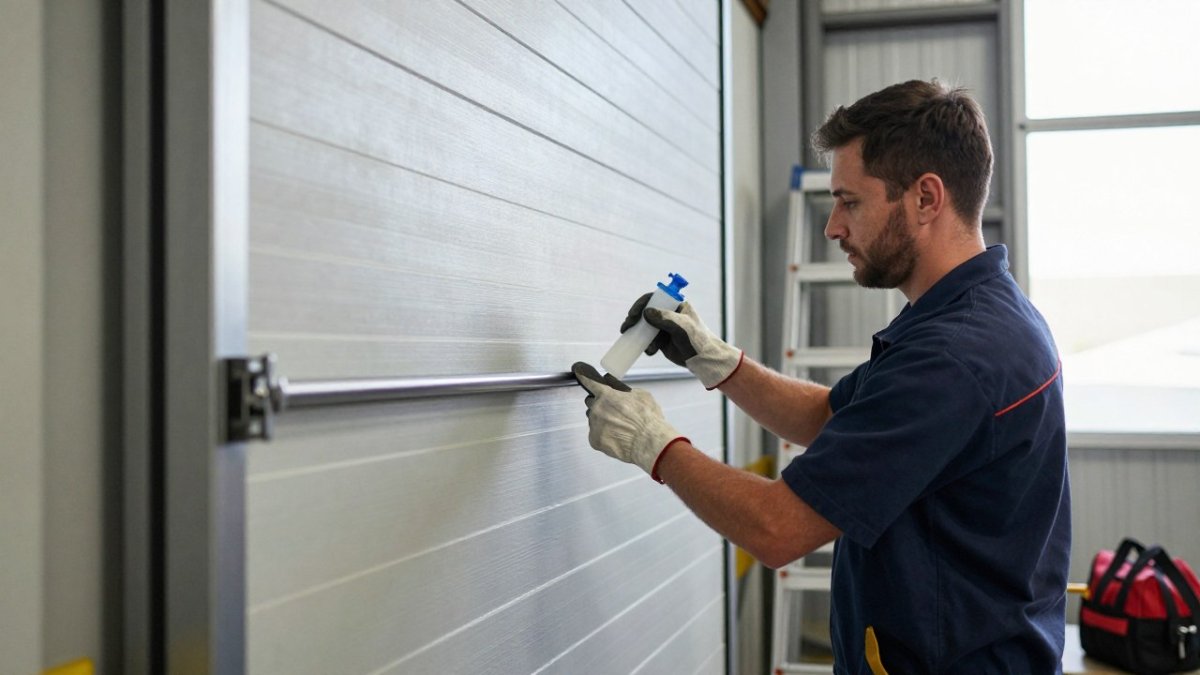
Follow these steps:
- Close the door and cut power to the opener.
- Brush dirt off rollers, hinges, and tracks first.
- Apply a silicone-based lubricant to rollers and ball bearings.
- Add a light grease to hinges and pivot points.
- Wipe off excess so grit does not collect.
- Run the door once, then recheck.
Skip the tracks. Lubricant on guides attracts dust and causes sticking. Keep tracks clean and dry.
Watch out: spraying heavy grease on everything feels productive but gums up rollers and traps debris. Use the lightest product that does the job.
Inspecting Tracks, Slats, and Hardware for Wear
Inspection is where small problems show themselves before they become expensive. Look at four things: tracks, slats, hardware, and the door curtain.
Check tracks and guides for bends, dents, and misalignment. A track out of line drags on rollers and wears them flat. Check slats and the door curtain for dents, rust, and cracks. Rust spreads fast on a steel door in a damp climate.
Hardware deserves a close look. Tighten fasteners. Check hinges for wear. Inspect cables for fraying. Look at springs for gaps or corrosion.
If a door is beyond repair or was never the right size, stop before ordering parts. Use our clearance guide to confirm the right fit for your opening before you buy a replacement.
Commercial Roll-Up Door Troubleshooting: Common Problems
Commercial roll-up door troubleshooting starts with the symptom, not the part. Match what the door does to what usually causes it.
- Door sticks or binds: dirty tracks, worn rollers, or misalignment
- Squeaking or grinding: dry bearings or hinges
- Door runs slow or jerky: opener issue, power supply, or balance problem
- Door will not open: check controls, safety devices, and power first
- Door drifts or drops: counterbalance or spring problem, call a technician
- Uneven travel: track damage or a bent slat
Start with the cheapest fix. Clean the tracks before you replace rollers. Check power and controls before you suspect the opener. Most "broken" doors are dirty or dry, not dead.
Commercial Roll-Up Door Tension Adjustment Safety Limits
Commercial roll-up door tension adjustment is not a do-it-yourself job. Springs and cables store serious energy. A mistake can cause severe injury or death.
Here is the boundary. Clean, lubricate, inspect, and tighten fasteners yourself. Stop at springs, cables, and counterbalance work. That is technician territory, and no guide should tell you otherwise.
Understanding Stored Energy Hazards
Torsion springs store energy proportional to the door's weight and height. Springs and cables under tension store serious energy and can cause severe injury if they fail. This is why trained technicians use specialized tools and follow strict safety protocols.
When to Stop and Call a Professional
Stop work and call a qualified technician if you notice any of the following:
- The door is difficult to lift or feels unusually heavy.
- The door drifts down when released mid-travel.
- You hear a loud bang from the spring area.
- Cables are frayed, kinked, or show signs of wear.
- The door is uneven or binds during operation.
These symptoms indicate counterbalance problems that require expert adjustment or replacement. Attempting to adjust springs without proper training and tools is dangerous.
What You Can Safely Do
You can and should perform routine maintenance that does not involve stored energy. This includes cleaning tracks, lubricating rollers and hinges, tightening fasteners, and inspecting for wear. If you are unsure whether a task is safe, err on the side of caution and call a professional.
Understanding proper setup helps you spot problems early and know when to replace rather than repair. Our step-by-step installation guide shows how a correctly set door should be built and adjusted.
Building a Maintenance Record That Proves Performance
A maintenance record turns guesswork into evidence. Log every inspection, every part replaced, and every service call. Note the date, the door, the task, and who did it.
Track a few performance indicators:
- Operating cycles per week
- Repairs per door per year
- Downtime hours from door failures
- Parts replaced and when
These numbers tell you which doors are failing and when to plan replacement. They also support warranty claims and budget requests. When a door nears the end of its life, our commercial buyer's guide helps you weigh affordable replacement options.
Ordering Replacement Parts for Your Roll Up Door
Ordering replacement parts starts with the right identification. Get the door model, size, and part number before you shop. Match the part to the door, not to a similar-looking one.
Common replacement parts include rollers, hinges, bearings, and bottom seals. Keep a small stock of fast-wearing parts on hand so a repair does not wait on shipping.
When a door is past repair, replace rather than patch. Browse our roll-up door product line to find a replacement or an upgrade that fits your opening and your traffic.
A door that fails during a busy shift costs more than any maintenance task. Roll Up Doors Direct builds durable steel roll-up doors with pre-assembled designs for faster installation, certified wind load rated options, and a low price guarantee. Get started with Roll Up Doors Direct and keep your doors moving with less downtime.
Frequently Asked Questions
What is the best lubricant for roll-up doors?
A silicone-based lubricant is the safest choice for tracks, rollers, and hinges because it does not attract dust the way grease does. Use a light grease on bearings and heavier moving parts that carry load. Avoid general-purpose oil on the door curtain, since it collects grit that wears the slats. Wipe away old lubricant and debris before applying a fresh coat so the new product reaches the metal instead of sitting on top of grime.
How often should a commercial roll-up door be inspected?
High-traffic loading dock doors should get a visual walk-around daily and a full inspection monthly. Doors that cycle 500 to 1,000 times a week need closer attention than a service bay door that opens a few times a day. Add a yearly adjustment by a technician, and shorten the interval in dusty, coastal, or cold-weather locations where rust and grit build up faster. Log each inspection so you can spot trends instead of reacting to breakdowns.
Can I adjust the tension on a commercial roll-up door myself?
Cleaning and lubricating are safe for most owners, but spring and cable tension work is not a do-it-yourself task. Springs store enough force to cause serious injury, and a slip can send the door curtain down without warning. Limit your own checks to listening for unusual noise, watching for jerky operation, and confirming the door balance feels even. When tension needs changing, call a qualified technician with the right winding bars and training.
What should be included in a roll-up door maintenance checklist?
A useful checklist covers tracks and guides for alignment and debris, slats and curtain for dents or rust, rollers and ball bearings for wear, hinges and fasteners for tightness, springs and cables for visible damage, and the opener, power supply, controls, and safety devices for correct function. Add a pass/fail column and the date so each inspection produces a record.