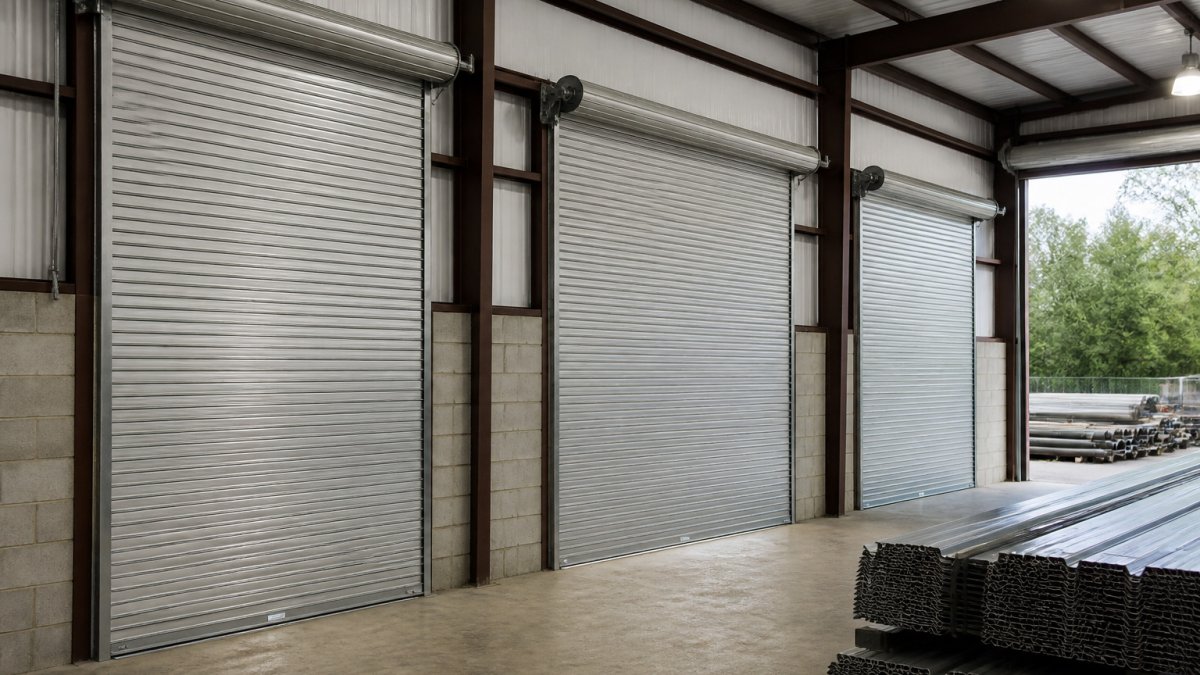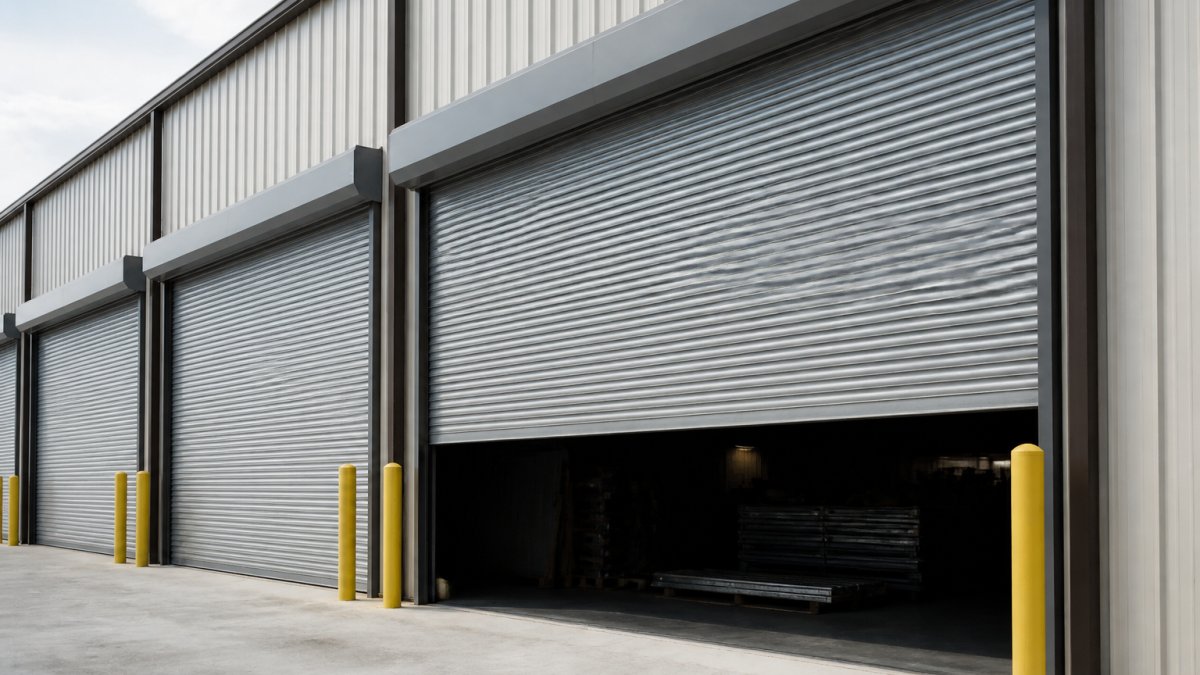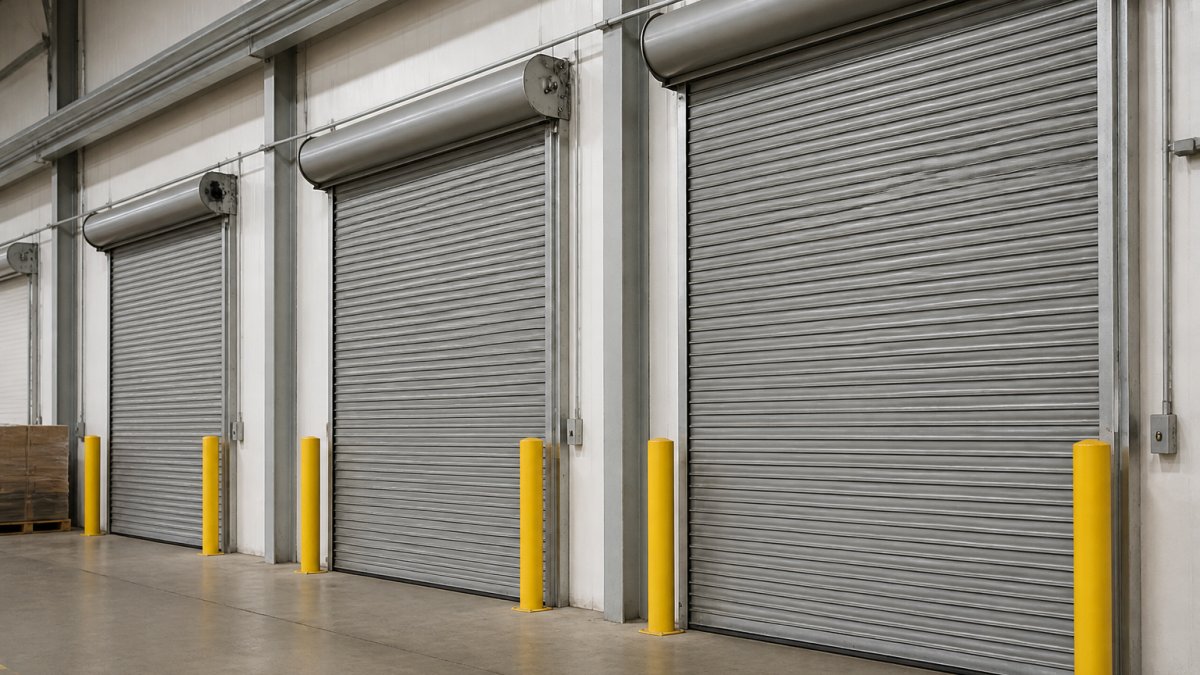
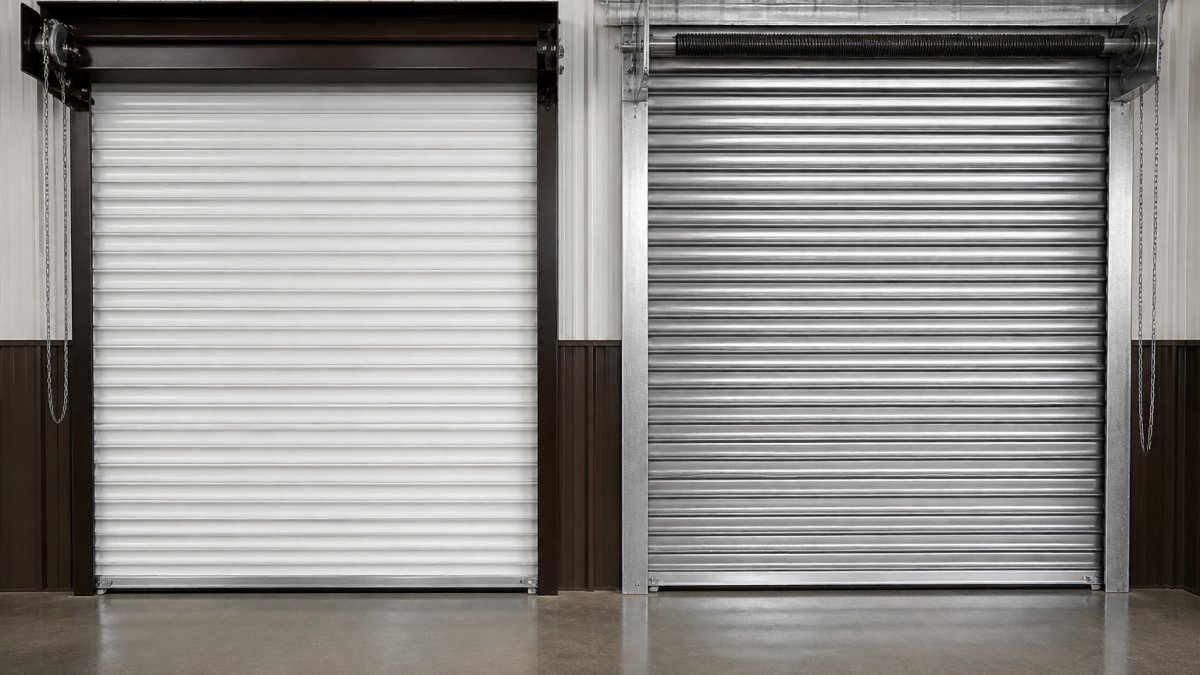
 comparison
Insulated vs Uninsulated Roll Up Doors for Commercial Use
Last Updated: November 2, 2026
Quick Summary
Insulated roll up doors add a foam core between two steel faces, which slows heat transfer, cuts air infiltration with proper seals, and lowers condensation risk compared with single-skin uninsulated doors. They cost more upfront but suit heated warehouses, cold storage, and climate-controlled spaces.
- Polyurethane foam cores dominate commercial insulated roll-up doors because they pack the highest insulating value per inch of slat thickness.
- Ask suppliers for the whole-assembly U-factor and air-infiltration rate, not just the core R-value.
- Air infiltration often matters more than R-value, so seal quality at guides, header, and floor does real work.
- A true retrofit usually means a new curtain, new guide rails, and a rebalanced or replaced operator.
- Replaceable slats let you repair a damaged section instead of replacing the whole steel curtain.
Table of Contents
- Insulated vs Uninsulated Roll Up Doors: What Changes
- Roll Up Door Insulation Types: Foam, Polyurethane, and More
- Insulated Roll Up Door R-Value: Reading Thermal Performance
- Insulated Roll Up Door Sizing: Matching the Opening and Building
- High-Speed Insulated Roll Up Doors for Busy Loading Docks
- Installation, Retrofit, and Lifecycle Value Compared
- Choosing Insulated Roll Up Doors for Your Project
- Frequently Asked Questions
Insulated vs Uninsulated Roll Up Doors: What Changes
Insulated roll up doors add a foam core inside the steel slats, and that single change alters thermal performance, noise, condensation risk, and price. Market forecasts put the insulated roll-up steel door category at $3.12 billion in 2025, rising to $5.18 billion by 2034 at a 5.8% compound annual growth rate, according to Dataintelo's insulated roll-up steel door market report. Buyers are clearly paying for the upgrade.
Here is what actually changes on site. An uninsulated door is a single steel curtain with no thermal break, so the slats conduct heat straight through the opening. An insulated roll-up door sandwiches polyurethane or foam between two steel faces, which slows heat transfer and cuts air infiltration when paired with a proper weather seal.
The difference shows up in conditioned space.
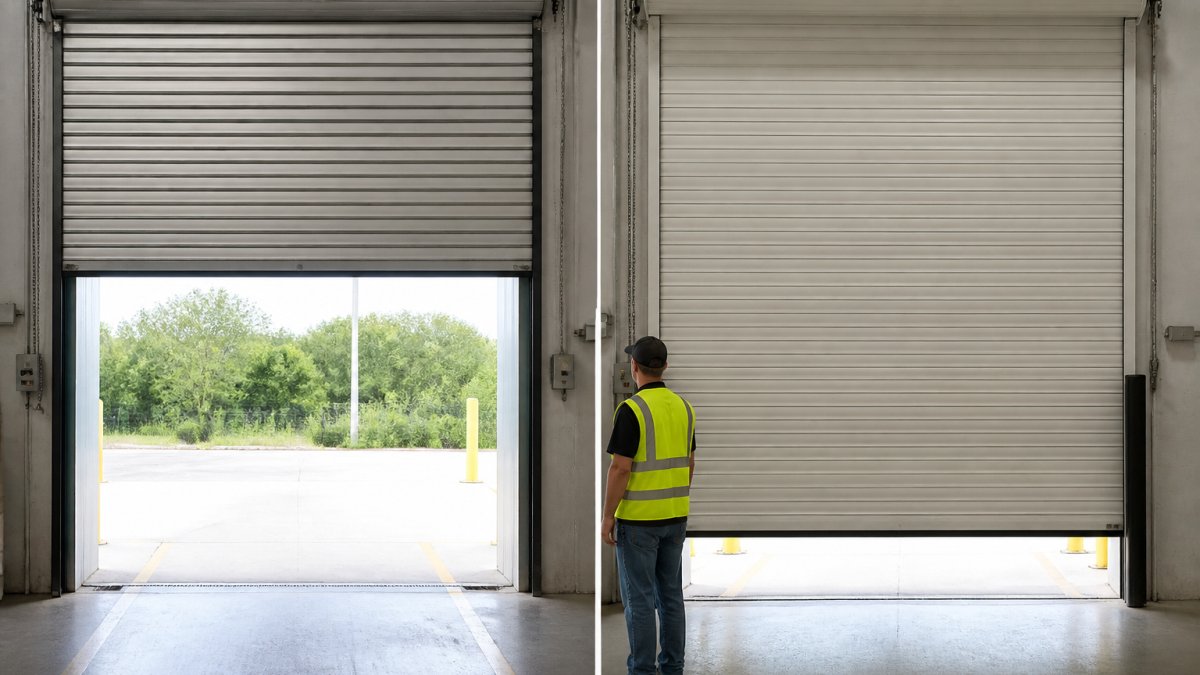
Watch out: skipping the thermal break on a heated building undoes most of the insulation benefit, because the slat edges become a direct path for heat loss.
Roll Up Door Insulation Types: Foam, Polyurethane, and More
Polyurethane foam cores dominate commercial insulated roll-up doors because they pack the highest insulating value per inch of slat thickness.
Material choice matters too. Cookson's insulated rolling door specifications list galvanized steel, stainless steel, and aluminum as available faces, and each trades cost against corrosion resistance and weight.
- Polyurethane core: best R-value per inch, rigid, common in commercial door curtains
- Polystyrene core: lighter on budget, lower thermal performance
- Foam-filled slats with thermal break: reduces heat transfer at slat joints
- Stainless or aluminum faces: corrosion resistance for wash-down or coastal buildings
A common mistake is comparing core material alone. The steel curtain's slat profile and the guide rail seal do as much work as the foam.
Insulated Roll Up Door R-Value: Reading Thermal Performance
R-value measures resistance to heat flow, and U-factor measures the opposite, so a lower U-factor means better thermal performance. Insulated roll-up doors typically publish both, and you want the number for the whole assembly, not just the foam.
The problem is that published numbers are not apples to apples. A center-of-slat R-value describes only the foam core, while a whole-assembly U-factor accounts for slat joints, guide rail seals, the header, and the floor gap. Two doors with the same core R-value can perform very differently once those paths are included. When you compare products, ask for the whole-assembly U-factor and the air-infiltration rate at a stated pressure differential, not just the core R-value.
Here is how the main construction types stack up on consistent measures:
| Measure | Uninsulated single-skin | Foam-backed single-skin | Insulated double-skin with thermal break |
|---|---|---|---|
| Core R-value | None | Low | Highest per inch of slat |
| Whole-assembly U-factor | Highest (worst) | Moderate | Lowest (best) |
| Air infiltration | High at slat joints and guides | Moderate | Lowest when paired with proper seals |
| Thermal break at slat edges | No | Rarely | Yes |
| Condensation risk on cold surfaces | High | Moderate | Low |
Air infiltration often matters more than R-value in real buildings. A door that seals tightly at the guides, header, and floor loses far less conditioned air than a higher-R door with gaps. Weather seal quality, brush or bulb seals, and a threshold that actually contacts the floor do as much work as the foam.
Cycle rating belongs in the same conversation. CornellCookson describes an insulated rolling-door model rated for 1,000,000 maintenance-free operations in high-cycling use, per CornellCookson's insulated roll-up garage door page. On a busy dock, a door that cycles dozens of times an hour loses energy every time it opens, so opening speed and seal recovery matter alongside R-value.
Insulation is one part of a broader energy-efficiency strategy, not a standalone guarantee. Cornell notes the door helps regulate indoor temperatures as part of a full building envelope plan, per Cornell Iron Works' guide to insulated rolling doors. Treat published R-values as one input, alongside air infiltration, weather seal quality, and how often the door opens.
If you want to browse the actual product category, roll up doors shows the models and specifications side by side.
Insulated Roll Up Door Sizing: Matching the Opening and Building
Door size drives curtain weight, coiling mechanism load, and the structural support the building needs above the opening. Order the rough opening measurement first, then confirm clear opening height and width, because those two numbers are not always the same.
Wind load is the spec most buyers forget. A certified wind load rating tells you the door and its guide rails are engineered for a stated pressure, which matters on exterior openings in high-wind areas. Our guide on what wind load rating roll-up doors need walks through how that rating is specified.
Watch out: sizing a door to the finished opening instead of the rough opening is the most common ordering error we see, and it usually means a return and a delay.
High-Speed Insulated Roll Up Doors for Busy Loading Docks
High-speed insulated roll up doors trade slat mass for opening speed, which cuts the time an opening sits exposed to outside air. On a dock with constant traffic, that exposure time drives energy loss more than R-value does.
Opening frequency is the deciding variable. A door cycling dozens of times an hour benefits from faster travel and a strong coiling mechanism; a door that opens twice a day does not need the premium.
Durability under impact matters just as much. Replaceable slats let you repair a damaged section of the steel curtain instead of replacing the whole door, which is the single biggest lifecycle cost saver on a high-traffic dock. For material comparisons under heavy use, see our guide to the best materials for high traffic doors.
Installation, Retrofit, and Lifecycle Value Compared
Pre-assembled doors cut installation time.
Retrofit feasibility is where most brief guides stop, and it deserves more. Adding insulation to an existing rolling door is rarely a matter of slipping foam into the old curtain. An insulated slat stack is thicker and heavier than the single-skin curtain it replaces, which changes the coiling load, the required headroom, and the balance of the counterbalance system. In most cases a true retrofit means a new curtain, new guide rails sized for the thicker stack, and a rebalanced or replaced operator. Retrofitting insulation into an existing single-skin curtain in place is seldom practical and often voids the door's original ratings.
Replacement usually wins when any of these are true:
- The existing guide rails cannot accept a thicker curtain without modification.
- The counterbalance or operator is already near the end of its service life.
- The opening needs a certified wind-load rating the old door never had.
- The building's use has changed to conditioned space, cold storage, or climate-controlled self-storage.
Retrofit can still make sense when the existing door is recent, the guides and operator have capacity to spare, and the goal is a modest thermal upgrade rather than a code-driven change.
On total installed cost, a 2026 cost article lists installed residential insulated roll-up doors at $750 to $2,500, per BlueTex Insulation's installed cost data. Commercial openings run higher and vary with size, wind rating, and cycle requirements. Separate the door, installation labor, operator, and maintenance when you compare, because a lower door price can be erased by extra field labor or a heavier operator.
Lifecycle value turns on three things: energy loss at the opening, maintenance frequency, and repair cost after impact. Replaceable slats let you repair a damaged section instead of replacing the whole curtain, which is the biggest lifecycle saver on high-traffic openings. On a conditioned building, the energy saved per year depends on climate, opening frequency, and how well the door seals, so a higher upfront price can pay back faster on a busy, heated dock than on a door that opens twice a day.
| Factor | Uninsulated | Insulated |
|---|---|---|
| Upfront cost | Lower | Higher |
| Thermal performance | Minimal | Foam core plus thermal break |
| Condensation risk | Higher | Lower |
| Noise reduction | None | Some sound dampening |
| Retrofit practicality | Not applicable | Usually new curtain and guides |
| Best for | Unheated storage, sheds | Conditioned commercial space |
For practical detail on what affects install time, read our breakdown of preassembled roll up door installation time factors.
Choosing Insulated Roll Up Doors for Your Project
Match the door to the building's use, not to a spec sheet. Heated warehouse, cold storage, climate-controlled self-storage, and an unheated workshop each call for a different answer.
Alpine says its insulated rolling-door systems provide thermal insulation and that sound-dampening versions can reduce sound transmission, per Alpine Doors' insulated door product page. Rimol describes a polyurethane foam core and a corrosion-resistant white steel finish on its insulated line, per Rimol's insulated roll-up door page. Both are worth a look, and both are quote-based, so confirm lead times early.
When you are ready to price a project, our guide on how to get a quote for warehouse doors covers what to have on hand. We keep ordering simple with factory-direct pricing, pre-assembled designs, custom sizes, and nationwide delivery.
Specifying insulated roll up doors means balancing R-value, wind rating, cycle count, and installed cost against how the building actually gets used. Get one of those wrong and the door underperforms for its whole service life. Roll Up Doors Direct offers pre-assembled roll-up doors in custom sizes, certified wind load rated models, and nationwide delivery. Get started with Roll Up Doors Direct and spec the right door the first time.
Frequently Asked Questions
What is the best insulation for a roll up door?
The best insulation choice depends on your climate, how often the door opens, and whether you need sound dampening.
Are insulated roll up doors worth it for a warehouse?
For warehouses that are heated, cooled, or climate-controlled, insulated roll up doors reduce heat transfer and air infiltration at the largest opening in the building. If your warehouse is unconditioned and opens constantly, the payback is weaker, but noise reduction and condensation control may still justify the cost.
Can you add insulation to an existing roll up door?
Before retrofitting, check whether the rolling mechanism and guide rails can handle the added weight of a thicker curtain.
How do you choose the right size insulated roll up door?
Measure the clear opening width and height, then account for guide rails, headroom, and side room required by the rolling mechanism. Insulated roll up door sizing must also match the building structure and wind load requirements. Custom sizing is available from Roll Up Doors Direct for non-standard dimensions. Always confirm the door's certified wind load rating matches your area's code requirements before ordering, and verify that the curtain rolls up without obstructing structural elements.