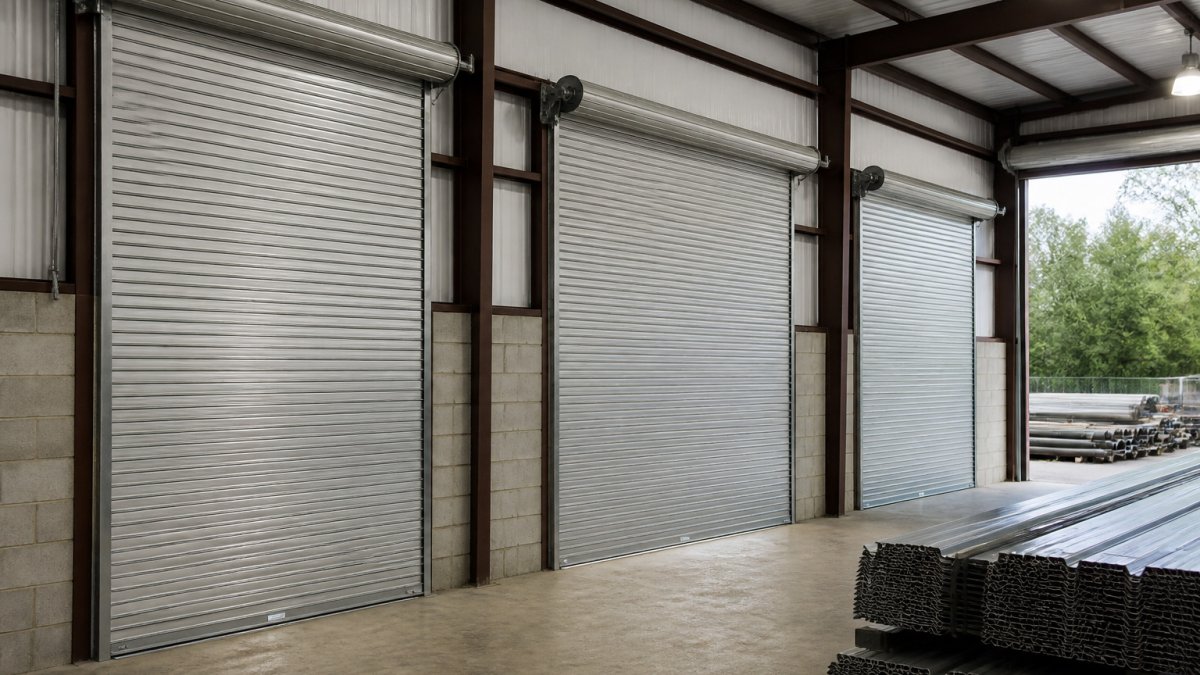
 comparison
Steel Door Depot Alternatives for Contractors Buying Doors
Last Updated: November 1, 2026
Quick Summary
A steel door depot alternative is a second supplier that can match your door spec, lead time, and total landed cost. Score each vendor on product range, lead time, freight, documentation, and warranty, using the same criteria for every bid.
- Score every quote on total landed cost, including freight, hardware, and accessories, not just the door price.
- Confirm whether a quoted lead time is a production date or a delivery-to-site date.
- Request submittal sheets, fire-rating labels, and wind-load ratings in writing before ordering.
- Measure the rough opening carefully and confirm whether the supplier needs clear or rough dimensions.
- Ask who handles damage claims and warranty service before you sign.
Table of Contents
- Why Contractors Look for a Steel Door Depot Alternative
- What Contractors Should Compare Across Commercial Roll-Up Door Suppliers
- Rolling Steel Door vs. Sheet Door: Which Fits Your Project
- Custom-Size Commercial Roll-Up Doors and When You Need Them
- Pre-Assembled Roll-Up Doors and Installation Time
- Pricing, Delivery, and Quote Factors for Multi-Door Orders
- Requesting a Quote and Checking Your Next Supplier
- Frequently Asked Questions
Contractors comparing commercial roll-up door suppliers often look at more than one option before they commit. This guide helps you judge whether a different supplier fits your next project better. Our aim is to give you a practical checklist, not a sales pitch.
Why Contractors Look for a Steel Door Depot Alternative
Contractors look for alternatives for predictable reasons. Lead times slip, quotes arrive late, and a supplier's catalog may not match the openings on a job. Price matters too, but the quoted door price is only part of the picture. Freight, custom work, and installation prep can change the final bill.
Many buyers simply want a second source. A backup supplier protects a schedule when one vendor runs short. The key question is not which name is most famous. It is which supplier can deliver the right door, at the right spec, to the right site, on time.
What Contractors Should Compare Across Commercial Roll-Up Door Suppliers
Most supplier roundups list door types and move on. Our affordable commercial roll-up door options and buyer criteria gather those options in one place. Contractors need a scorecard they can actually run a bid through. Use the criteria below, and score every vendor on the same scale so the comparison holds up when you present it to a project owner or a general contractor.
The contractor scorecard
| Criterion | What to ask | Why it matters on a job |
|---|---|---|
| Product range | Rolling steel, sheet doors, hollow metal, fire-rated options | A single-source supplier reduces split shipments and mismatched hardware |
| Size and spec range | Standard sizes, custom dimensions, gauge options, wind-load ratings | Non-standard openings are common in renovations |
| Lead time | Committed production window and shipping transit time | Schedule risk is the top reason contractors switch suppliers |
| Total landed cost | Door, frame, hardware, freight, liftgate, and any customization | A low door price can hide freight and accessory costs |
| Documentation | Submittal sheets, fire-rating labels, hardware templates | Required for permit and inspection sign-off |
| Order support | Named contact, change-order process, damage and return policy | Problems surface after delivery, not before |
| Warranty | Coverage term, what is excluded, who performs service | A warranty is only useful if someone answers the phone |
Lead time: stock versus made-to-order
Ask each supplier to separate stock items from made-to-order items. Custom widths, heights, and finishes can add production time. A common pattern is that contractors who need a door inside a tight window order a stock size and frame the opening to match, rather than ordering custom and absorbing the schedule risk. Get the ship date in writing and confirm whether it is a production date or a delivery date, the two are often confused in quotes.
Specification and code checks before you order
Before you commit, verify the items an inspector will ask about:
- Fire rating: confirm the label and rating on any door serving a rated opening, and keep the listing documentation with the submittal.
- Accessibility and egress: confirm hardware prep matches the opening's use and that the door meets the applicable accessibility requirements for the space.
- Hardware preparation: confirm hinge, track, and operator prep match the hardware you plan to install.
- Wind-load rating: required in many jurisdictions; ask for the rating in writing rather than assuming a default.
Documentation to request with every quote
Ask for submittal sheets, installation instructions, and warranty terms alongside the price. A supplier that cannot produce documentation quickly is a schedule risk on any project that needs a permit.
Industry research supports the caution. A Market Reports World steel doors market forecast, 2026 estimates the steel doors market at USD 13,462 million in 2026, which shows how large and competitive the category has become. A competitive market gives buyers options, but it also means suppliers differ widely in service.
Rolling Steel Door vs. Sheet Door: Which Fits Your Project
Rolling steel doors and sheet doors serve different jobs. Rolling steel doors coil up into a header, which saves interior space. Read whether industrial roll-up doors justify the investment for your project.
Choose based on use. A warehouse dock that sees daily forklift traffic needs a heavier, more durable build. A detached workshop may not. Check the gauge and wind rating on each option, since those specs drive durability.
The Janus International rolling steel door product line offers rolling steel doors in multiple series and sizes, which illustrates how much variation exists within a single product family.
Custom-Size Commercial Roll-Up Doors and When You Need Them
Standard sizes cover many openings, but not all. Our custom-size roll-up door buying guide walks through the full set of options. Existing buildings, renovations, and irregular openings often require a custom width or height. Custom work typically lengthens lead time, so flag it early in your project schedule.
Before you order, measure the rough opening carefully and confirm whether the supplier needs a clear-opening or rough-opening dimension. Mistakes here cost more than the door itself.
Roll Up Doors Direct offers customizable sizes and specifications, so contractors with non-standard openings can request a tailored quote.
Pre-Assembled Roll-Up Doors and Installation Time
Pre-assembled designs are intended to support quick, simple installation. See the factors that determine preassembled door installation time. Installation time still depends on the opening, the header, the track alignment, and the operator, so do not assume a fixed savings figure.
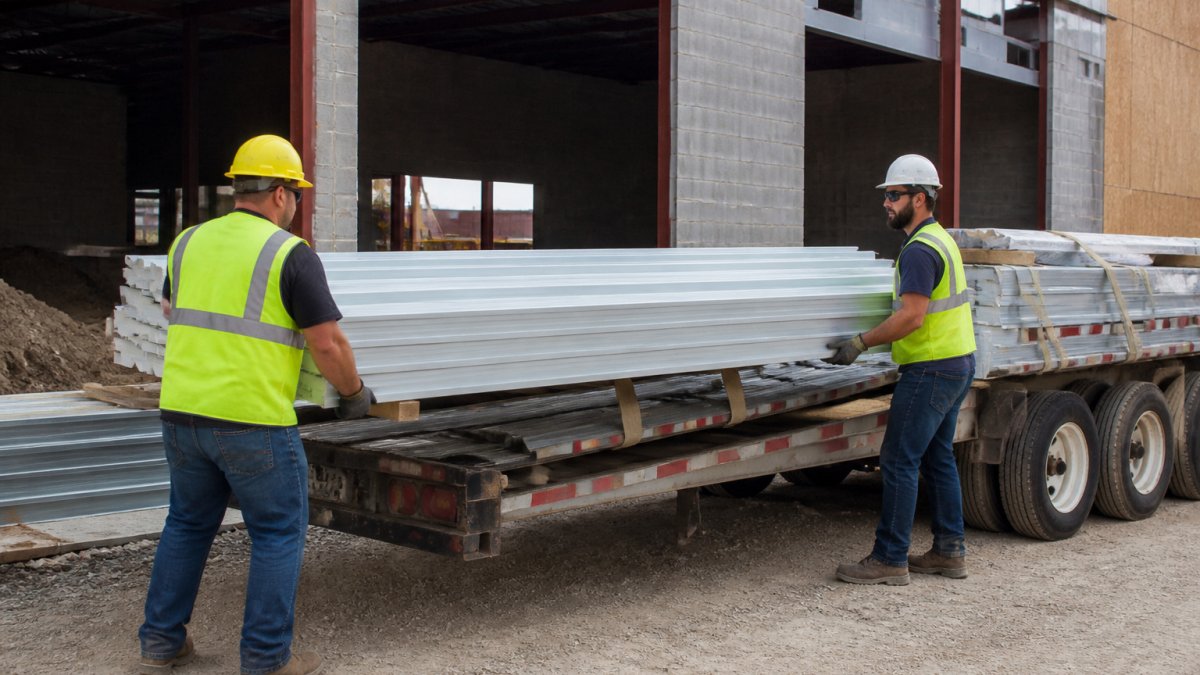
Ask suppliers which components ship assembled and what the crew still must do.
Pricing, Delivery, and Quote Factors for Multi-Door Orders
Multi-door orders change the economics, but not in the way most buyers expect. Quantity can affect unit price, yet delivery logistics and specification choices often move the total more than the per-door price does. Treat the quote as a landed-cost exercise, not a door-price exercise.
The five cost drivers
- Door and frame. Size, gauge, and finish drive the base price. Heavier gauge and custom dimensions cost more than stock sizes.
- Hardware and accessories. Operators, tracks, hinges, and weather seals are frequently quoted separately. Ask for them as line items.
- Freight. Quoted separately by most suppliers. Confirm whether the rate is to a dock, to a curb, or inside delivery.
- Customization. Non-standard widths, heights, and finishes can add production time and cost.
- Installation prep. Assembly requirements at the site can affect labor and cost.
Freight and delivery terms that change the total
Ask these questions before you sign:
- Is freight quoted separately or included?
- Is a liftgate required at the delivery site, and who pays for it?
- Is delivery to a loading dock, a curb, or inside the building?
- Who is responsible for damage discovered after the driver leaves?
- What is the process for a damaged or short shipment?
A common pattern is that contractors who confirm these terms up front avoid the change orders that erode margin on a multi-door job.
Lead times and schedule protection
Lead times deserve the same attention as price. Ask for a committed ship date in writing, and check how the supplier handles delays. For multi-door orders, ask whether the doors ship together or in phases, a phased shipment can protect a schedule if the first openings are ready before the rest.
Returns, warranties, and order support
Ask how the supplier handles a specification error, a damaged shipment, and a warranty claim. Get the return window and restocking terms in writing. Confirm who performs warranty service, the manufacturer, the distributor, or a local installer, because that determines how fast a failed part gets resolved.
Pricing depends on quantity, specifications, delivery location, and order timing. Please request a current quote from Roll Up Doors Direct for your exact configuration. Factory-direct pricing and nationwide delivery are part of how we serve multi-door buyers.
Requesting a Quote and Checking Your Next Supplier
A useful quote request includes door type, width, height, quantity, gauge preference, wind-load requirement if applicable, delivery address, and required delivery date. Our step-by-step guide to getting a warehouse door quote shows how to prepare one. The more complete your request, the more accurate the response.
When you evaluate a new supplier, verify the basics: business history, product documentation, warranty terms, and references from contractors who have used them. Ask how support works after installation if a hardware part fails.
For a supplier that combines factory-direct pricing, customizable sizes, and nationwide delivery, request a quote from Roll Up Doors Direct, then compare it against your current options using the scorecard above. Your next door should fit your opening, your schedule, and your budget.
Frequently Asked Questions
What should contractors compare when choosing a steel door supplier?
Start with product range, sizing options, and whether the supplier lists rolling steel doors and wind-rated models for your application. Confirm how quotes are issued, what delivery covers for multi-door orders, and what warranty and support terms apply after installation. Ask for written specifications before ordering so you can check door gauge, dimensions, and hardware against your project plans.
Where can contractors buy commercial roll-up doors?
Contractors can buy commercial roll-up doors from manufacturers, specialty distributors, and online suppliers that sell direct. Each source differs in catalog breadth, custom sizing, and ordering process. Roll Up Doors Direct offers commercial and residential models with customizable sizes and nationwide delivery. Current pricing depends on quantity, specifications, and delivery location, so request a quote on the website for an accurate figure.
What is the difference between a rolling steel door and a sheet door?
A rolling steel door is built from interlocking slats that coil into a compact housing above the opening, which saves overhead and side space. A sheet door, often called a sectional or panel door, moves on tracks as solid panels. Rolling steel doors suit high-traffic loading docks and storage facilities, while sheet doors are common where wide clear openings and insulation matter more.
Are pre-assembled roll-up doors easier to install?
Pre-assembled designs reduce on-site assembly, which can shorten installation time and lower labor hours on multi-unit projects. Crews still need to prepare the opening, verify dimensions, and set hardware correctly. Confirm with your supplier which components arrive assembled and which require field work, so your installation schedule reflects the actual labor involved.